
Navigating the UK skincare market feels like walking through a minefield of aggressively marketed treatments and wildly varying prices. You want clear skin. You also want to know if spending £150 actually gets you better results than spending £50. This guide breaks down exact facial pricing across London and the UK. We reveal what actually works for specific skin types. We also show you how to spot a clinic that cares about your skin barrier more than their upselling quota. We strip away the spa marketing fluff to give you the concrete clinical realities behind these popular requested treatments.
What Is the Best Facial for Your Skin Type and Concerns?
There’s no single “best” facial. The right one depends on what your skin is doing right now. Acne-prone skin usually needs deep extraction and antibacterial ingredients. Dull, tired skin responds well to hydration-focused treatments. Fine lines and early ageing concerns call for something that stimulates collagen, not just cleanses.

Breaking Down the Most Popular Facial Treatments
- HydraFacial: hydrating, gentle exfoliation, suits almost every skin type
- RF Microneedling: collagen stimulation for texture, scarring, and firmness
- Dermaplaning: manual exfoliation, instantly smoother makeup application
- Chemical Peel: targets pigmentation, sun damage, and dullness
- BIO RE Peel (TCA-based): stronger resurfacing for more stubborn concerns
Each of these sits at a different intensity level. HydraFacial and dermaplaning have essentially no downtime. Peels and RF microneedling can leave skin pink or flaky for a day or two. If you’ve got an event coming up, that timing matters more than the treatment name.
Pre- and Post-Care: How to Choose the Best Facial Cleansers
Your facial results depend partly on what you do at home before and after. A gentle, fragrance-free cleanser is the safest bet in the 48 hours before a treatment, since anything active or exfoliating can leave skin more reactive under the aesthetician’s hands. Afterward, the goal shifts to calming and barrier support.
Step 1: Switch to a gentle, low-pH cleanser three days before your appointment.
Step 2: Skip retinol, AHAs, and BHAs for 48 hours pre-treatment.
Step 3: Post-facial, cleanse with lukewarm water only for the first 24 hours.
Step 4: Reintroduce your normal routine gradually, starting with hydration, not actives.
Look for cleansers built around ceramides or glycerin rather than sulphates. A £12 cleanser with the right formulation will do more for your results than a £45 one packed with fragrance and foaming agents.
Comprehensive Facial Price Guide: How Much Does a Facial Cost?
Here’s the direct answer: a basic facial in the UK typically runs £30 to £70, a HydraFacial sits between £100 and £200, and medical-grade treatments like RF microneedling or PRP facials can reach £150 to £450 per session. Location, the practitioner’s qualifications, and the technology used all shift that number substantially.
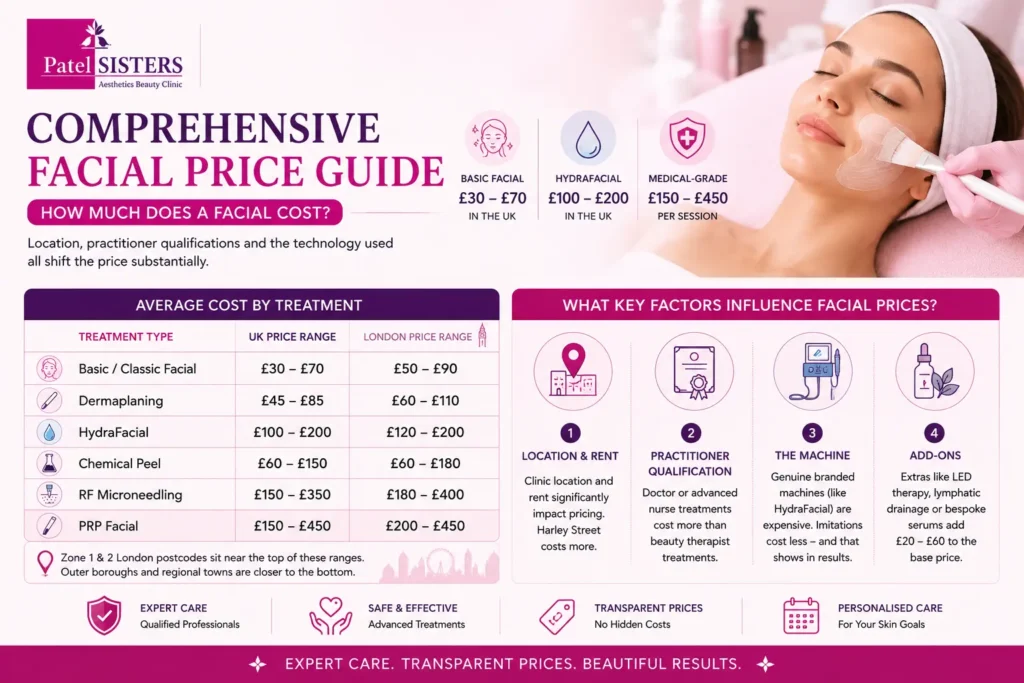
Average Cost by Treatment (Basic, HydraFacial, and Medical-Grade)
| Treatment Type | UK Price Range | London Price Range |
|---|---|---|
| Basic/Classic Facial | £30 – £70 | £50 – £90 |
| Dermaplaning | £45 – £85 | £60 – £110 |
| HydraFacial | £100 – £200 | £120 – £200 |
| Chemical Peel | £60 – £150 | £80 – £180 |
| RF Microneedling | £150 – £350 | £180 – £400 |
| PRP Facial | £150 – £450 | £200 – £450 |
Rates in Zone 1 and 2 London postcodes tend to sit near the top of these ranges, while facials booked in outer boroughs or regional towns land closer to the bottom.
What Key Factors Influence Facial Prices?
Step 1: The clinic’s location and rent. Harley Street pricing reflects overheads that a suburban clinic simply doesn’t carry.
Step 2: Practitioner qualification. A treatment delivered by a doctor or advanced nurse practitioner costs more than one from a beauty therapist, and for good reason with medical-grade devices.
Step 3: The machine itself. Genuine branded HydraFacial devices cost clinics tens of thousands of pounds. Imitation “hydrodermabrasion” machines are cheaper to buy, which is exactly why some facials advertised at £50 aren’t the real treatment.
Step 4: Add-ons like LED therapy, lymphatic drainage, or bespoke serums, which typically add £20 to £60 onto a base price.
Did you know?
0% of UK consumers now say they prefer professional treatments like facials over DIY skincare products.
How to Choose the Best Facial Clinic Near Me
Searching “best facial near me” returns dozens of options, and most of them look identical on the surface. Reviews can be bought. Before-and-after photos can be cherry-picked or edited. The real signals sit a layer deeper, in how the clinic operates once you’re actually in the room.
5 Signs You’ve Found a Top-Tier Skin Clinic
- Practitioners list actual qualifications, not just “trained in aesthetics”
- They ask about your skin history before recommending a treatment
- Machines are named brands, not generic descriptions like “advanced hydro device”
- Aftercare instructions are given in writing, not just spoken quickly at checkout
- Pricing is published clearly, without a “price on consultation” wall for standard treatments
A clinic that’s confident in its results is usually confident enough to show its prices upfront. That transparency alone filters out a good chunk of weaker operators.
Important Questions to Ask Before Your Appointment
Step 1: Ask which specific device or product line they use, and whether it’s the genuine branded version.
Step 2: Ask who will actually perform the treatment and what their training covers.
Step 3: Ask what downtime to expect, honestly, not the optimistic version.
Step 4: Ask what happens if you have a reaction, and what their aftercare support looks like.
A clinic that answers these without hesitation has probably answered them a hundred times before. One that gets vague or defensive is telling you something too.
Patel Sisters Clinic is the Best Clinic for Facials: Here Know Why
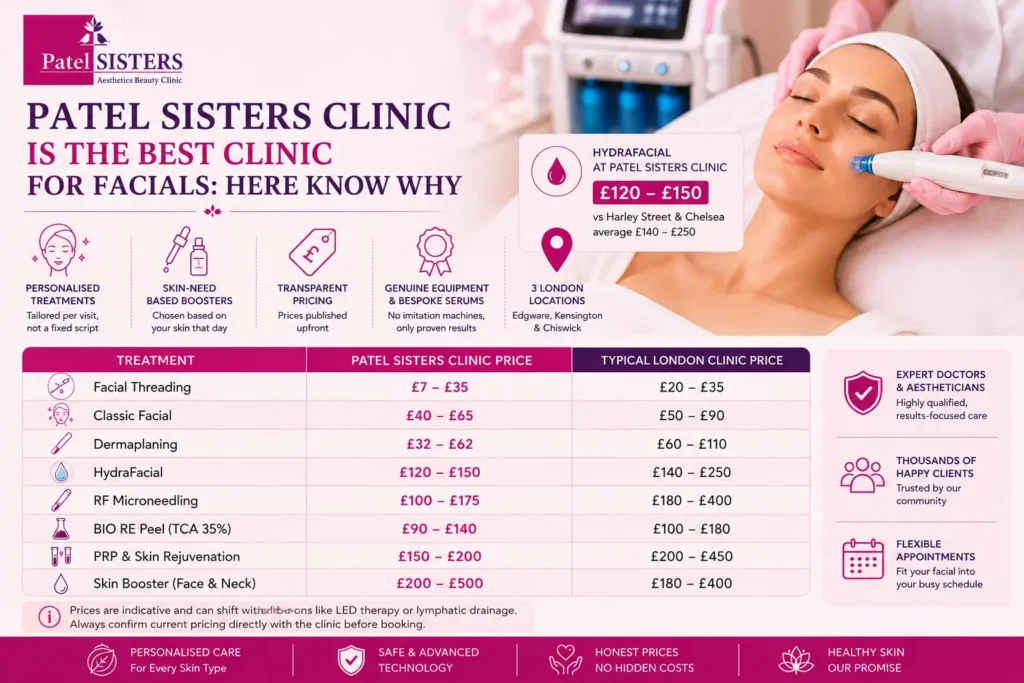
Choosing a facial clinic ultimately comes down to trust: does the practitioner actually know your skin, and is the pricing honest before you sit in the chair? Patel Sisters Clinic has built its reputation across three London locations (Edgware, Kensington, and Chiswick) on exactly that. Treatments are tailored per visit rather than run on a fixed script, boosters are chosen based on what your skin needs that day, and pricing is published upfront instead of hidden behind a “book a consultation” wall. For a HydraFacial specifically, Patel Sisters Clinic prices sit at £120 to £150, which undercuts the Harley Street and Chelsea average of £140 to £250 while still using genuine branded equipment and bespoke serums rather than an imitation machine.
Best Price (Table)
| Treatment | Patel Sisters Clinic Price | Typical London Clinic Price |
|---|---|---|
| Facial Threading | £7 – £35 | £20 – £35 |
| Classic Facial | £40 – £65 | £50 – £90 |
| Dermaplaning | £32 – £62 | £60 – £110 |
| HydraFacial | £120 – £150 | £140 – £250 |
| RF Microneedling | £100 – £175 | £180 – £400 |
| BIO RE Peel (TCA 35%) | £90 – £140 | £100 – £180 |
| PRP & Skin Rejuvenation | £150 – £200 | £200 – £450 |
| Skin Booster (Face & Neck) | £200 – £500 | £180 – £400 |
Prices are indicative and can shift with add-ons like LED therapy or lymphatic drainage. Always confirm current pricing directly with the clinic before booking.
Frequently Asked Questions (FAQs) About Facials
How much should I expect to pay for a facial?
Basic facials in the UK start around £30 to £70, while HydraFacials and medical-grade treatments range from £100 to £450. London clinics generally charge 15 to 30% more than regional ones, largely due to rent and staffing costs.
How can I confidently find the best facial near me?
Check that the clinic lists practitioner qualifications, uses named branded equipment, and publishes prices openly. Read reviews on Google rather than the clinic’s own site, and don’t hesitate to call and ask direct questions before booking.
What is the best facial for acne and glowing skin?
For acne, look for treatments with deep extraction and antibacterial ingredients, such as a purifying HydraFacial. For an overall glow, hydration-focused facials combined with gentle exfoliation tend to deliver the most visible, low-risk results.
What are the best facial cleansers to use after a treatment?
Choose a fragrance-free, ceramide- or glycerin-based cleanser for the 48 hours after treatment. Avoid anything with sulphates, retinol, or acids until your skin barrier has settled, which typically takes two to three days.
Are medical-grade facials worth the higher clinic price?
For deeper concerns like scarring, pigmentation, or significant ageing, yes, since medical-grade devices reach layers of skin a standard facial can’t touch. For general maintenance and glow, a standard or HydraFacial treatment is usually sufficient and better value.