
Facial treatments are professional skincare procedures designed to deeply cleanse, exfoliate, hydrate, and rejuvenate the skin using advanced products and technologies. In London, factors such as pollution, hard water, and daily stress can accelerate skin concerns like acne, pigmentation, dullness, and premature ageing. Popular treatments include HydraFacial, chemical peels, microneedling, LED therapy, and radiofrequency skin tightening. Choosing a reputable clinic is essential, as treatments should be tailored to your skin type and concerns. With expert care and consistency, facial treatments can improve skin health, boost confidence, and deliver long-lasting visible results.
London wears hard on your skin. The water itself is constantly stripping the skin of its natural barrier. Dust from the microscopic tube networks is seeping into your pores long before you’re actually in the office. A well performed, clinical facial has the power to reverse this damage. The treatment introduces concentrated active ingredients deep beyond the resilient surface layer.
There is specialized machinery, which of course cannot be obtained for domestic use, that practitioners employ. The skin begins to function like a working organ once more. Just what it needs. Most clients only seek an appointment when something visibly falls apart: either an unprecedented bout of anger on their face, or extreme unexplained pain from dryness, just prior to the society event they were to attend. And then you frantic. Fast results are what you desperately seek.
There will be an estimated million and a half clinics in London promising what are surely quite impossible, over-night improvements. The venue matters. If you get it wrong, some woman might slap a cold mask on you and charge ninety pounds. The right treatment can, and does, alter behavior in skin cells. There is a degree of understanding of the face, its anatomy and the unique effect a city has on human tissue, which comes with an effective facial.
Overloading a layer of dead cells with costly products and a wax like substance, is similar to waxing a filthy automobile: all you’re doing is locking the grease underneath. There is the full gamut from shady basements to frankly disturbing sterile operating environments in London, and getting this wrong means a loss of time and money. Selecting the right clinic alters how you look at yourself every morning, as you check you’re self in the mirror. Let us now examine what does in fact work.
What Is a Facial Treatment and Why Does Your Skin Actually Need One?
The body naturally regenerates the skin, but with aging, this process slows to over 40 days. The dead cells actually stick to the surface and create an invisible crust, completely deadening and flattening out your appearance. Available products just sit on this crust doing nothing; an in-clinic treatment is designed to stimulate the tissue.
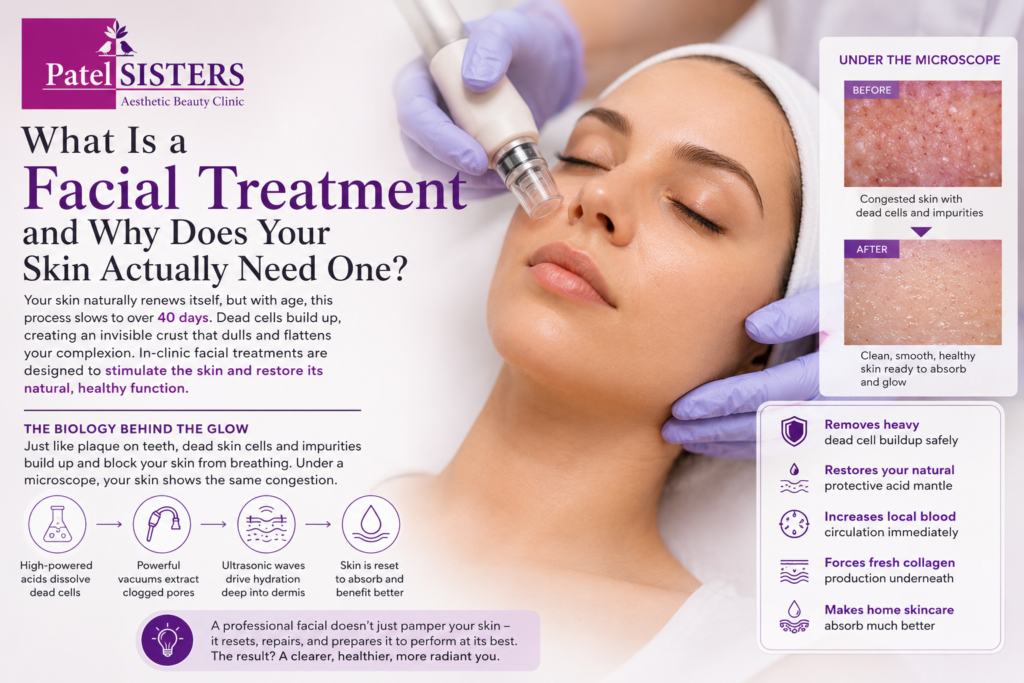
The Biology Behind the Glow
Consider a dental hygienist working on teeth; you brush and clean them twice a day but the hard, calcified deposit still remains and an expert needs to scrape it off. Your skin is identical when looked at under a microscope.
Aesthetic professionals will use special high-powered concentrations of acids to remove the difficult ties holding the dead skin cells together. High-powered vacuums are then applied to extract the clogged pores. Hydration is then manually driven deep into the dermis using ultrasonic wave treatments. It is absolutely vital for you to reset your face physically to accept your day-to-day skin treatments otherwise you will be throwing money away in moisturizers that can’t get into the skin.
- Removes heavy dead cell buildup safely.
- Restores your natural protective acid mantle.
- Increases local blood circulation immediately.
- Forces fresh collagen production underneath.
- Makes home skincare absorb much better.
How Often Should You Get a Facial Treatment?
It doesn’t just depend on budget.
- Every four weeks ideally.
- Before major life events.
- Quarterly for budget maintenance.
- Whenever congestion feels rough.
Types of Facial Treatments Available in London Right Now
Visit a decent clinic in Marylebone or Chelsea, you will be presented with a service menu that has the resemblance of a chemistry textbook. It is quite an unstable world in the capital. However, some treatments remain due to the very clear and visible results.
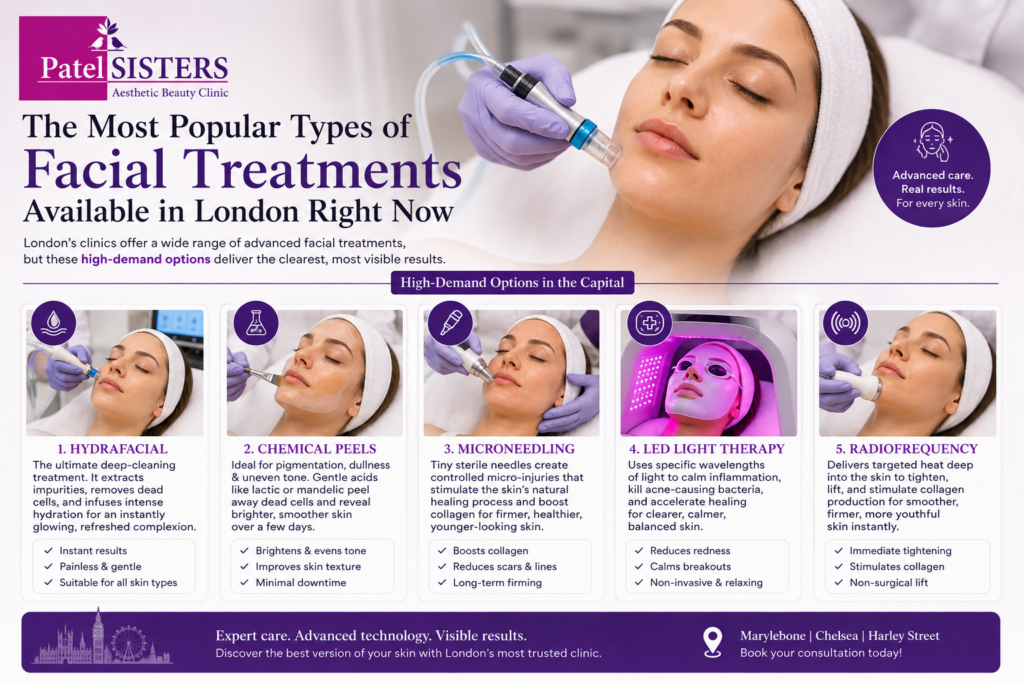
High-Demand Options in the Capital
There’s really nothing that can compete with HydraFacial right now. Customers want to see the murky gunk sucked from their pores in the transparent tube afterwards! It uses one machine to deep-clean and perform heavy liquid peel, before pumping intense moisture into the skin.
Chemical peels are hugely popular with problematic pigment issues. Do not be afraid of the name, they do not have to be kept hidden away from sun for weeks, just simple and light lactic or mandelic acid peels are effective at clearing the surface of skin over several days.
Microneedling is also one of the biggest everyday treatments required in London. Minimal sterile needles create a controlled micro-injury to the skin, and the body immediately rushes to repair and heal those minuscule wounds, creating fresh collagen structure
- HydraFacial for instant deep pore cleaning.
- Superficial peels for rapid tone brightening.
- Microneedling for long-term structural firming.
- LED light therapy for calming inflammation.
- Radiofrequency for immediate skin tightening.
HydraFacial vs Chemical Peel vs Microneedling: Which Should You Choose?
Prices don’t stay consistent. Clinics like Patel Sisters offer accessible tiers.
| Treatment | Best For | Average London Cost |
| HydraFacial | Dryness and glow | £119 to £149 |
| Chemical Peel | Acne marks | £64 to £120 |
| Microneedling | Scarring and lines | £120 to £200 |
Which Facial Treatment Is Right for Your Skin Type and Concern?
Buying a random discounted session online rarely works out well. You need precise chemical matching. Heavy, oily skin requires a completely different approach than a dry and reactive barrier.
Matching Treatments to Skin Profiles
Flaking and tight faces do not want intensive, mechanical extractions. What it needs is moisture pumped into the deep dermis layer. Go straight for something with 100% hyaluronic acid infusion. Oxygen facials are fantastic for this exact frustrating predicament.
An acne client requires strong salicylic acid as this ingredient cuts through the packed in oil within the pore structure. The culprit acne causing bacteria can then be annihilated with the clinical blue LED light. Aging complexions love heat activating collagen treatments. This is anything such as radiofrequency machines or very fine microneedling to fill in deep wrinkles physically. The overly sensitive clientele require a pure fruit enzyme exfoliant and a physical scrub is a definite no. You can save yourself from a wrathful, red complexion by having a practitioner that truly knows this matching process; before they even lay a finger on your skin they should be interviewing your routine.
What Happens During a Professional Facial Treatment – Step by Step
Knowing what to expect calms the nerves instantly. Good clinics follow a specific biological protocol. They don’t skip stages. Each phase physically sets up the next one for success.
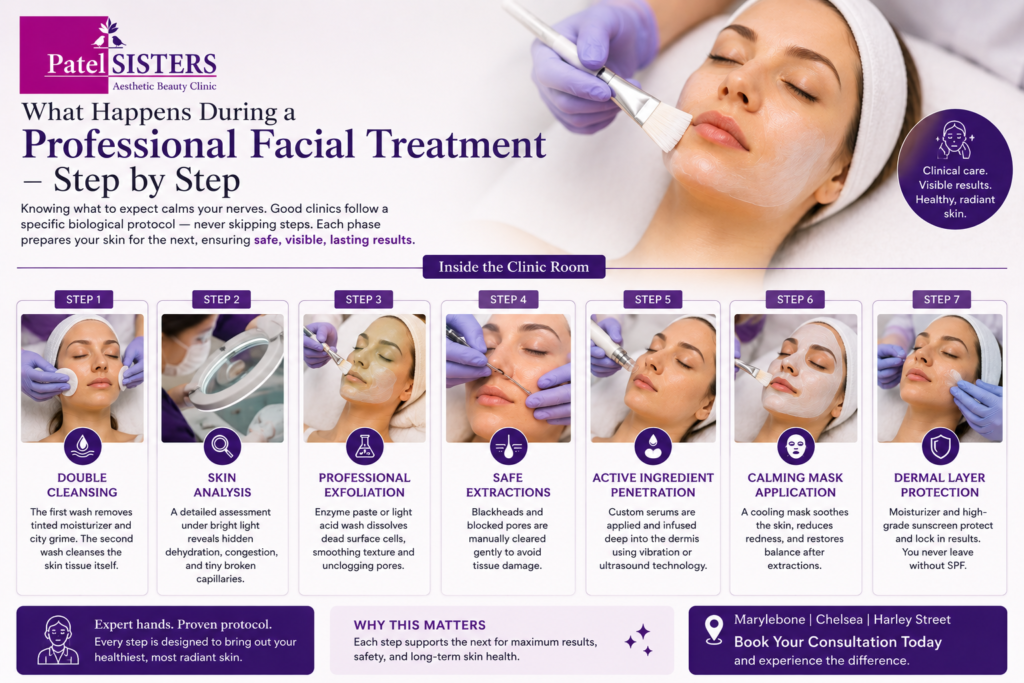
Inside the Clinic Room
Your aesthetician will evaluate your face under a harsh magnifying lamp first. This tells them what they’re actually dealing with beneath the makeup.
Step 1: Double Cleansing
The first wash removes tinted moisturizer and heavy city grime. The second wash actually cleans the skin tissue itself.
Step 2: Skin Analysis
They look closely under a bright fluorescent light. They check specifically for hidden dehydration and tiny broken capillaries.
Step 3: Professional Exfoliation
This might involve a thick enzyme paste or a light acid wash. It eats away the dead surface cells completely.
Step 4: Safe Extractions
They manually clear out blackheads and tightly blocked pores. Good practitioners perform this gently without tearing the surrounding tissue.
Step 5: Active Ingredient Penetration
Custom liquid serums go on next. The therapist might use a vibrating machine to push these vitamins deeper into the dermis.
Step 6: Calming Mask Application
A soothing cold mask cools the angry skin down. It massively reduces any redness caused by the extraction process.
Step 7: Dermal Layer Protection
They finish with specific heavy moisturizers and high-grade sunscreen. You never leave a reputable clinic without thick sun protection applied.
Facial Treatments for Common Skin Concerns: Acne, Pigmentation, Ageing, and Dullness
Standard gentle routines fail completely when faced with specific medical-grade problems. You can’t fix severe hormonal pigmentation with a nice smelling botanical cream. You need targeted and clinical action.
Targeted Approaches That Actually Work
Acne requires robust chemical treatments. High concentration beta-hydroxy acids are applied by aestheticians that literally eat through the thick glue that causes the clog inside the pore to adhere. Next high frequency glass wands are used to annihilate the underlying bacteria Colonies. The resulting redness has fallen dramatically within twenty four hours.
Pigmentation requires active melanin blockers. Strong tyrosinase inhibitors are actually applied during treatment by practitioners. Chemical peels blended for pigment are used to draw the darkened cells to the surface and off to the side and flake away without harmful harm.
Aging involves restructuring. It only works on revving up the sluggish fibroblast- the cells that make up new collagen. Micro current tools actively lift and then physically shock the muscles to maintain structure. Dull skin is by far the easiest problem to fix. A strong ( controlled) blast of either physical or chemical exfoliation is enough to immediately get light reflecting to the surface of the skin again.
- Acne needs deep structural pore clearance.
- Pigmentation requires strict melanin production suppression.
- Aging needs targeted thermal collagen stimulation.
- Dullness requires simple dead surface leveling.
Facial Treatments for Deeper Skin Tones: What London Clinics Often Get Wrong
Dark skin is one where great care has to be taken. Lots of the old aesthetic equipment was only ever tried and tested on pale skin types. The wrong laser wavelength or percentage of acid on a dark skin produces huge post inflammatory hyperpigmentation. Thus rendering the original problem worse.
Melanin-Safe Protocols
London’s demographics are so wonderfully varied. And yet the standard high street salon is using really outdated, unsafe methods of treating darker skin tones. Aggressive surface heat is the enemy.
Safe treatments emphasize gentle and progressive progressiveness. Mandelic acid works wonderfully for darker skin tones because it physically is a very large molecule and doesn’t get to the dermis quickly, preventing the inflammation from the chemical. Lasers have to use the appropriate safe wavelength. For darker skin tones the Nd:YAG laser is safe as it entirely skips the melanin in the epidermis and goes straight for the dermis. If a clinic is not thoroughly discussing the risks of post-inflammatory hyperpigmentation with you during the first consult, then walk out of the clinic. Look for someone that knows skin of color thoroughly.
The Difference Between a Beauty Salon Facial and a Clinic-Grade Facial Treatment
People get completely confused by the overlapping terminology. A spa day feels amazing. A clinical appointment actually gets things done. Understanding the massive difference prevents expensive disappointment.
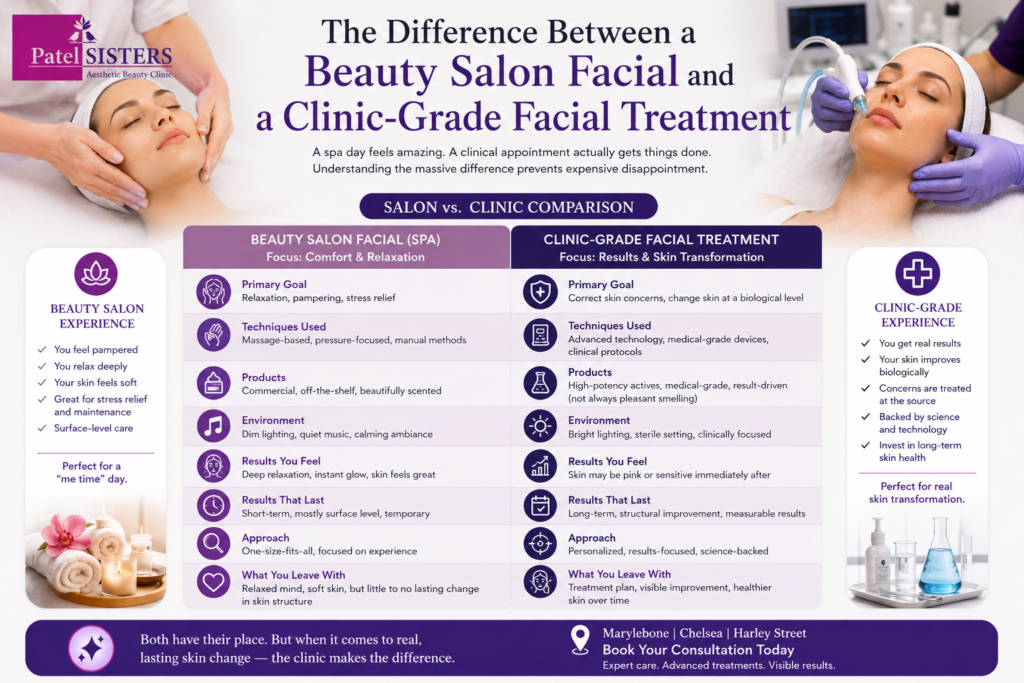
Salon vs. Clinic Comparison
Spas center on your comfort only. They utilize strong and pressure focused massage treatments. The commercial products smell amazing. There’s quiet acoustic music softly playing in the room. Your skin is extremely relaxed when you leave. But its actual composition is relatively unaltered.
Clinics only center on biological results. They use expensive machinery which necessitate tight medical control. Active products typically smell awful. The room feels clinically white and intensely lit. Skin might be pink for an hour. The long-term structural effects are quite dramatic and measurable.
| Feature | Beauty Salon Setting | Clinic-Grade Environment |
| Primary Goal | Deep relaxation and pampering. | Correcting specific skin conditions. |
| Product Types | Standard over-the-counter strengths. | Prescription-strength active ingredients. |
| Technology Used | Basic hot steamers. | Lasers, ultrasound, and radiofrequency. |
| Practitioner | Licensed beauty therapist. | Medical aesthetician or trained nurse. |
| Results Last | A few short days. | Several solid weeks to months. |
Facial Treatment Prices in London: What You Should Expect to Pay and Why
It is massively different throughout the city. You can be charged 50 quid or 500 quid for exactly 1 hour of time. But why do the prices leap so much from zone one to zone three? Because you are not paying for time alone, you are paying for the machines maintenance contract and the practitioner’s insurance.
Decoding the Cost
See available places like Patel Sisters Clinic A standard chemical peel or a bespoke deep cleanse usually comfortably sits between £85 to £150. This is the best time for routine and effective clinical care at the maintenance level. A true branded HydraFacial starts from £125. The clinic has literally to buy the patented disposable plastic tips from the manufacturer for every single face. That establishes a hard price floor.
Switch to Harley Street or premium locations such as PHI Clinic. Prices shoot up. You pay for the expensive post code. But you are also paying for heavily experienced medical professionals and million pound laser platforms. Advanced multi-stage treatments can cost £250 to £400 a session. Don’t just shop on price. Cheap treatments often mean heavily diluted products or fake machines bought overseas.
- Basic clinical facials: £80 to £120.
- Branded machine treatments: £125 to £200.
- Advanced doctor-led sessions: £250+.
- Always verify exact practitioner medical qualifications.
| Treatment | Typical London Price | Best For |
|---|---|---|
| Basic Clinical Facial | £80–£120 | General maintenance, dullness |
| Chemical Peel | £85–£150 | Pigmentation, texture |
| HydraFacial | £125–£200 | Instant hydration, pore cleansing |
| Microneedling | £150–£300 | Fine lines, scarring, texture |
| RF/HIFU Skin Tightening | £200–£400 | Ageing, sagging skin |
| Advanced Doctor-Led Protocol | £250+ | Complex/combination concerns |
Is a Facial Treatment Worth It: Benefits vs Risks
People expect miracles from a single visit. A good session acts like a reset button, but it won’t replace a solid daily routine.
Real Benefits You Can Expect
Results depend on the protocol chosen.
- Clears trapped sebum instantly.
- Speeds up natural cell turnover.
- Reduces visible pore stretching.
- Triggers fresh collagen production.
Possible Side Effects and How to Avoid Them
Things sometimes go badly wrong during manual extractions.
- Redness lasting up to 48 hours.
- Minor post-facial breakout causes.
- Skin barrier damage from friction.
- Hyperpigmentation from peels applied incorrectly.
Aftercare: What to Do (and Avoid) After a Facial Treatment
Walking out glowing means nothing if you ruin the results at home. Why? Because your skin barrier is fully compromised.
First 24 Hours
Your face is practically raw after heavy extractions.
- Skip the sweaty gym session.
- Avoid direct sun exposure entirely.
- Stop applying any retinol creams.
- Wash with gentle water only.
First Week
Pro Tip: Lock in hydration immediately. Your skin loses water rapidly during the first three days following deep aggressive extractions.
Keep your morning routine agonizingly boring. You want basic moisture. Not harsh scrubs. The collagen stimulation timeline dictates that real firming takes weeks to show anyway. Slapping a twelve-step routine onto a fresh chemical peel hurts, and it ruins the investment.
What Our Clients Say: Real Results from Real People in London
Reading endless clinical studies gets boring quickly. Hearing what actual people experience helps you decide if the time and money are truly worth it.
Stories From the Treatment Bed
Most clients come in highly frustrated. They’ve spent hundreds on viral TikTok serums that did absolutely nothing for their faces. They sit down in the chair fully expecting another expensive letdown.
Somewhere around the second session, the shift actually happens. “I finally stopped wearing heavy foundation to the office,” is a comment we hear constantly. A client from Islington came in dealing with painful and cystic jawline acne. Six weeks of targeted beta-hydroxy peels later, she had flat and calm skin for the first time in ten entire years. Another client dealing with severe sun damage from her twenties saw her dark pigmentation break apart after three targeted acid sessions. Real clinical treatments give you your face back.
- Massively reduced need for daily makeup.
- Calmer and less reactive skin barrier.
- Faded dark acne scarring over time.
- Brighter and more even overall tone.
- Increased confidence in bare natural skin.
How to Choose the Right Facial Treatment Clinic in London
London has a clinic on every corner. Half buy machines off questionable websites.
Questions to Ask Before Booking
Finding a competent practitioner matters immensely.
- Step 1 : What acid percentages do you use?
- Step 2 : Can I see healed results?
- Step 3 : Who handles the actual extraction?
- Step 4 : Are you fully insured here?
Red Flags to Avoid
Pro Tip: Walk away if a clinic promises zero downtime. Even basic procedures cause temporary inflammation and mild tissue swelling.
Never trust a business pushing chemical packages before a patch test. A legitimate provider points you toward a London aesthetic practitioner registry immediately. Stop letting unverified technicians burn your face. Fixing burns costs significantly more.
Conclusion
Skin biology is a slow process. The clinic session provides the bricks but consistency builds the house. Seek out an expert who genuinely listens and takes note of your concerns rather than trying to sell you the most expensive piece of machinery listed on the company menu. Sustainable skin health comes from a hushed and continuous dialogue between the illuminated clinical room and your nightly ritual at your bathroom sink. The results scream volumes when you stop searching for magic and just do the science.
FAQs
What exactly is a facial treatment and what does it involve?
This is an in-professional skin conditioning treatment. The highly-trained aesthetician would heavily cleanse, exfoliate and feed your face with the necessary nutritional values through the use of specific chemical acids, manual physical extraction methods and advanced machinery to enhance cellular performance of your face.
How long does a facial treatment take from start to finish?
The majority of average sessions are from 45-60 mins. More complex treatments which involve the application of a topical numbing cream or require additional machine passes could take longer, 90 mins. Express sessions are available. 60 mins gives active ingredients time to actually get into work.
Will a facial treatment hurt or feel uncomfortable?
Standard hydration is extremely comfortable. Medical grade treatment is slightly spicy. Chemical peel gives a warm prickling/deep heating feeling. Extractions a small sharp pinch. Nothing should feel intensely painful.
Can a facial treatment help with acne and breakouts?
Yes, indeed. Professionals can safely remove the clogged pore without encouraging the spread of bacteria. Strong acid peels with a high concentration of Salicylic acid can be used to limit heavy oil secretion. LED blue light can then be used to kill bacteria deep within skin tissue.
What should I avoid doing after my facial treatment?
Hands off face entirely, particularly dirty hands. Avoid the gym for a minimum of 24 hours to not press bacteria from perspiration into freshly opened pores. Do not use potent retinoic acid or highly exfoliating acids at home for a minimum of 3 days.
What is the difference between a spa facial and a clinic facial?
Spa facials are all about sheer relaxation and pampering with beautiful smelling products. Clinic facials are only about the structural bio-transformation of the skin and are all about specific conditions with the use of powerful active ingredients and machinery under stringent clinical procedures.
How much does a facial treatment cost in London?
A solid baseline clinical treatment can cost around £85-£150. Branded machine treatments, such as a HydraFacial, typically range from £125-£200. Premium Harley Street clinics can charge £250 plus for advanced custom protocols.