
HIFU (High-Intensity Focused Ultrasound) is a non-invasive skin tightening technique. It involves the use of focused ultrasound energy to heat the deeper layers of skin to encourage the production of new collagen, which can result in a subtle tightening effect to the jawline, cheeks, brow, and neck. A HIFU treatment will cost from approximately £150 to £1,800 in the UK (depending on the clinic and treatment area) for one session on a small area up to the full face and neck. There is no or minimal recovery time with results appearing gradually over 8 to 12 weeks.
This guide covers how HIFU works, what it costs in London, who it suits, the side effects, and what to ask before you book. You can also read about our HIFU treatment at Patel Sisters Clinic.
HIFU treatment throws that calculus completely out of the window. Simply relax in a chair for about an hour while the HIFU machine zaps sound waves deep into the skin’s dermis, without leaving any marks whatsoever on your face. You walk out only a little red and maybe with a tight feeling on the face. That’s pretty much the extent of the trauma of the procedure. Your skin then does the rest, building new collagen over the following 8–12 weeks.
| Treatment Detail | Information |
|---|---|
| Cost | £150–£1,800 (by area) |
| Treatment Time | 30–90 minutes |
| Downtime | None to mild redness |
| Results Visible | 8–12 weeks |
| Results Typically Last | 12–18 months |
What Is HIFU and How Does It Work?
The Mechanics of Sound Waves
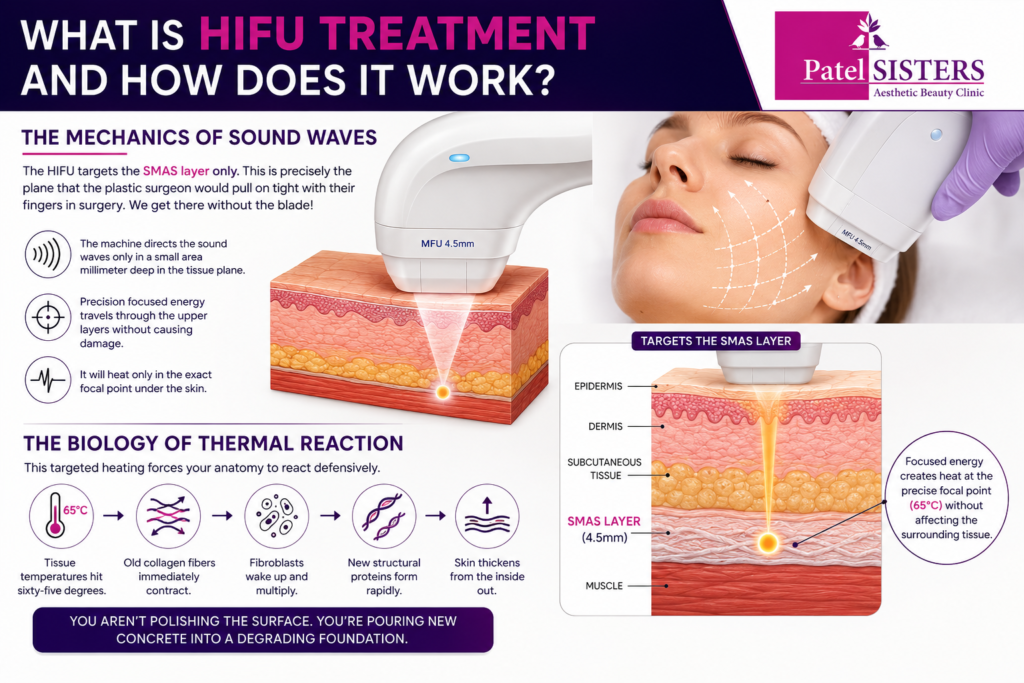
The HIFU targets the SMAS layer only. This is precisely the plane that the plastic surgeon would pull on tight with their fingers in surgery. We get there without the blade! Lasers cannot do this; light-based treatments diffuse on the skin surface. Waves can be focused:
The machine directs the sound waves only in a small area millimeter deep in the tissue plane. If you try to calibrate a compass inside of a moving car. You require a precise location. The energy travels through the upper layers of your dermis, and nothing is produced to cause damage; then it will heat only in the exact focal point under the skin.
The Biology of Thermal Reaction
This targeted heating forces your anatomy to react defensively.
- Tissue at the focal point reaches roughly 60–70°C.
- Old collagen fibers immediately contract.
- Fibroblasts wake up and multiply.
- New structural proteins form rapidly.
- Skin thickens from the inside out.
You aren’t polishing the surface. You’re pouring new concrete into a degrading foundation.
What Can HIFU Treat on the Face and Neck
Avoiding the Clinical Look
Almost all non-surgical options create cosmetic side effects. Both additional volume (fillers) and relaxation of muscles (botox) are not meant to tighten loose skin. HIFU does a deeper tightening of the support layer and does not add additional volume.
HIFU moves the underlying tissue upwards by sheer force without adding volume to the face. It is your face that you will always have. It is merely higher up on the bone. This is crucial. The wind tunnel effect of poor facelifts haunts cosmetic clinics. This effect is avoided completely.
Targeted Treatment Zones
The technology works across multiple distinct anatomical zones.
- Lifting a heavy, dropping brow.
- Tightening loose skin around jowls.
- Smoothing deep horizontal neck creases.
- Sharpening the natural jawline profile.
- Fading stubborn upper chest wrinkles.
- Firming the delicate under-eye area.
You get the same tightening effect but without the needles. Because your body made the new collagen, it’s 100% your own. It takes time. This is also the genius of the cover-up. No one ever questions how you did it, they assume you finally started sleeping eight hours a day.
Is HIFU Safe? Side Effects and Who Should Not Have It
Patients ask about safety before price. It carries an excellent track record clinically. Things can get uncomfortable. Heat hits the muscle layer directly. Tiny, rapid static shocks. Pulsing right under your skin. The discomfort proves the energy is reaching the target depth.
Common Short-Term Side Effects
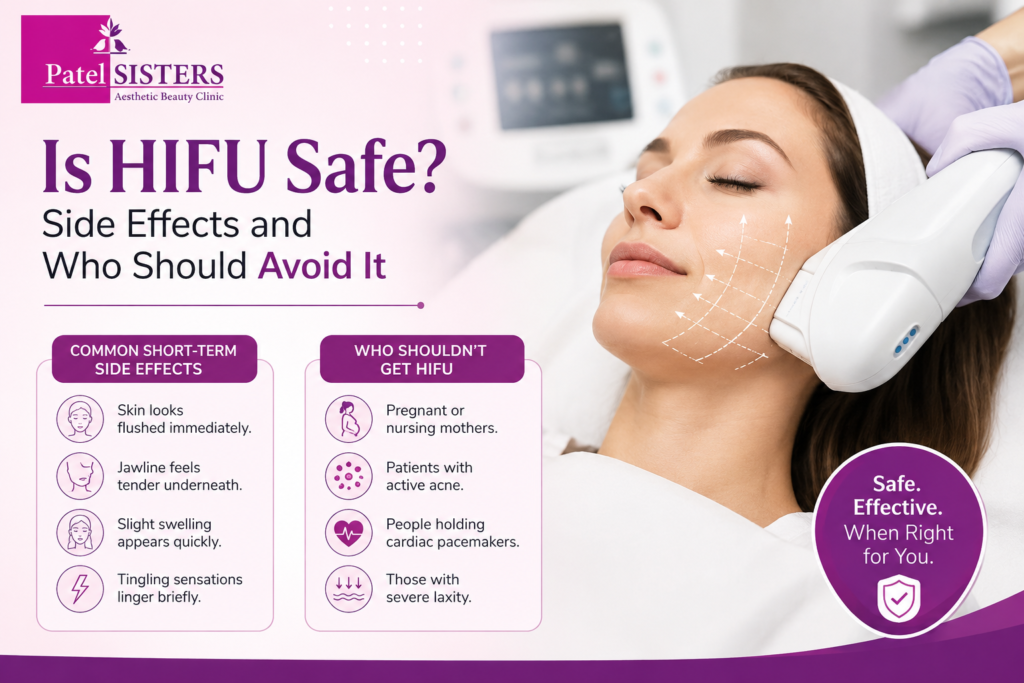
You’ll likely experience a few temporary physical reactions.
- Skin looks flushed immediately.
- Jawline feels tender underneath.
- Slight swelling appears quickly.
- Tingling sensations linger briefly.
Who Shouldn’t Get HIFU
Practitioners must turn certain profiles away to prevent medical complications.
- Pregnant or nursing mothers.
- Active inflammatory acne in the treatment area.
- People holding cardiac pacemakers.
- Those with severe laxity.
- Active skin infections or open wounds in the treatment area.
- Metal implants or certain fillers in the area (confirm with your practitioner).
HIFU vs Botox, Fillers, and a Facelift: Cost and Results Compared
Most clinics push injectables to guarantee repeat quarterly visits. Ultrasound requires patience. Tissue needs twelve weeks to rebuild. You have to sit with the discomfort of not knowing if it worked until month three. That waiting period tests your nerves.
HIFU vs Botox: Lifting vs Relaxing Muscles
Toxin stops a muscle from moving entirely. Ultrasound tightens the structural layer holding that muscle up. The Botox cost sits around £300.
- Botox smooths upper face.
- Ultrasound lifts lower jowls.
- Results show different speeds.
- Toxins fade much faster.
HIFU vs Surgical Facelift: Cost, Downtime, Results
Surgery cuts and pulls the skin mechanically. Non-surgical options heat the tissue to force natural contraction. Think of it like shrinking a wool sweater in a hot wash. While many search for the price of cheek filler in the UK, ultrasound targets sagging differently.
| Treatment | Typical UK cost | Downtime | Results visible | Lasts |
|---|---|---|---|---|
| HIFU | £150–£1,800 (by area) | None to mild redness | 8–12 weeks | 12–18 months |
| Anti-wrinkle injections (Botox) | £150–£450 (by areas) | None | 3–14 days | 3–4 months |
| Dermal fillers | £200–£500 per syringe | 1–2 days of mild swelling | Immediate | 9–18 months |
| Surgical facelift | £8,000–£15,000 | 2–6 weeks | After swelling settles | 7–10 years |
HIFU vs Ultherapy: What’s the Difference?
Ultherapy is a branded HIFU system that uses ultrasound imaging so the practitioner can see the tissue layers being treated. Many other HIFU devices use the same principle but may not offer live imaging. Ask your clinic which device it uses, what depths it treats, and the regulatory status of that device.
How Much Does HIFU Cost in the UK and London?
Why HIFU Prices Vary So Much
There is a colossal markup in the London clinics due to their specific postcode; you see prices routinely well over the thousand mark for Harley Street. What makes this price fluctuate so much is that it is two things you’re actually being charged for, the clinic treatment is just one of them. Treating at the wrong depth can reduce results.
Average prices can swing wildly depending on region and reputation, if a price looks too good to be true, then run away. The clinic have probably bought a knock-off device online, it is ten times more than the price of decent medical equipment to buy one. The treatments that you’re paying for are essentially a warm face massage and absolutely no lift.
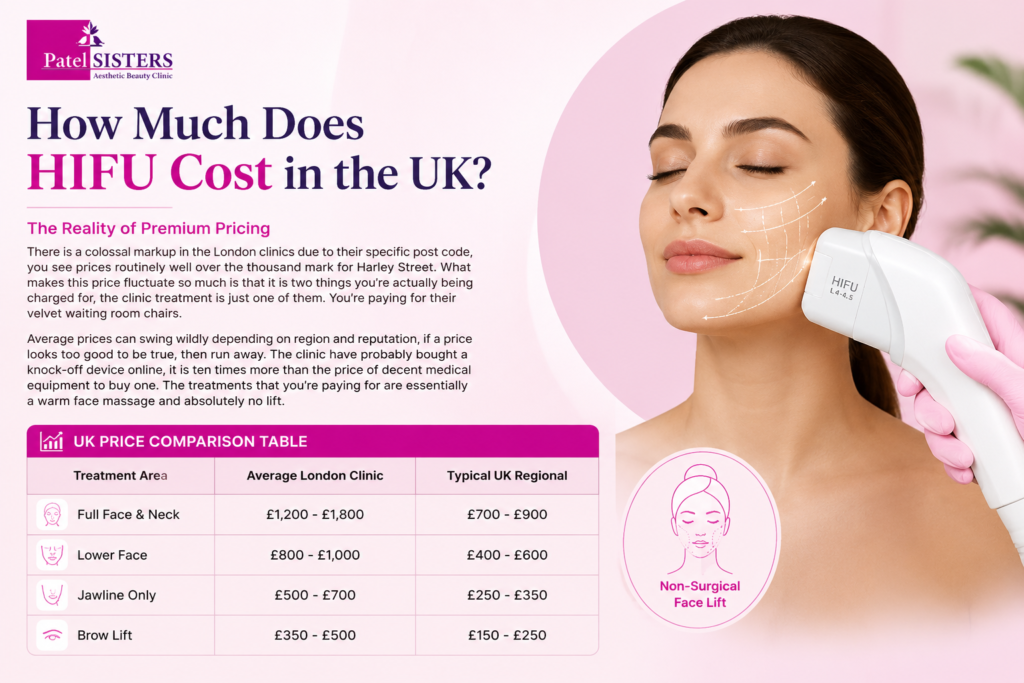
UK Price Comparison Table
Pricing varies based on the total treatment area required.
| Treatment Area | Average London Clinic | Typical UK Regional |
| Full Face & Neck | £1,200 – £1,800 | £700 – £900 |
| Lower Face | £800 – £1,000 | £400 – £600 |
| Jawline Only | £500 – £700 | £250 – £350 |
| Brow Lift | £350 – £500 | £150 – £250 |
What Affects HIFU Pricing
Prices vary by clinic location, device, and practitioner experience. Central London and Harley Street clinics usually charge more, but a higher price does not guarantee a better result. You’re paying for three separate variables. That machine matters heavily. The person holding the handle matters more. Pricing rarely reflects the actual treatment.
Device Type and Consumables
Counterfeit devices are flooding the market right now.
- Cartridges have strict limits.
- Premium brands cost more.
- Cheap devices risk burns.
- Maintenance adds hidden fees.
The consultation fee should automatically roll into your final bill. Never pay hidden surcharges just for basic numbing cream.
Practitioner Experience and Clinic Location
Rent dictates a massive chunk of your bill. Harley Street doctors charge for their zip codes. Meanwhile, a clinic in Edgware might offer the identical protocol for half the price. You’re funding the clinic’s overhead.
HIFU Preparation and Aftercare
The Preparation Protocol
You don’t need weeks of intense preparation before and after HIFU. Just clear your afternoon schedule.
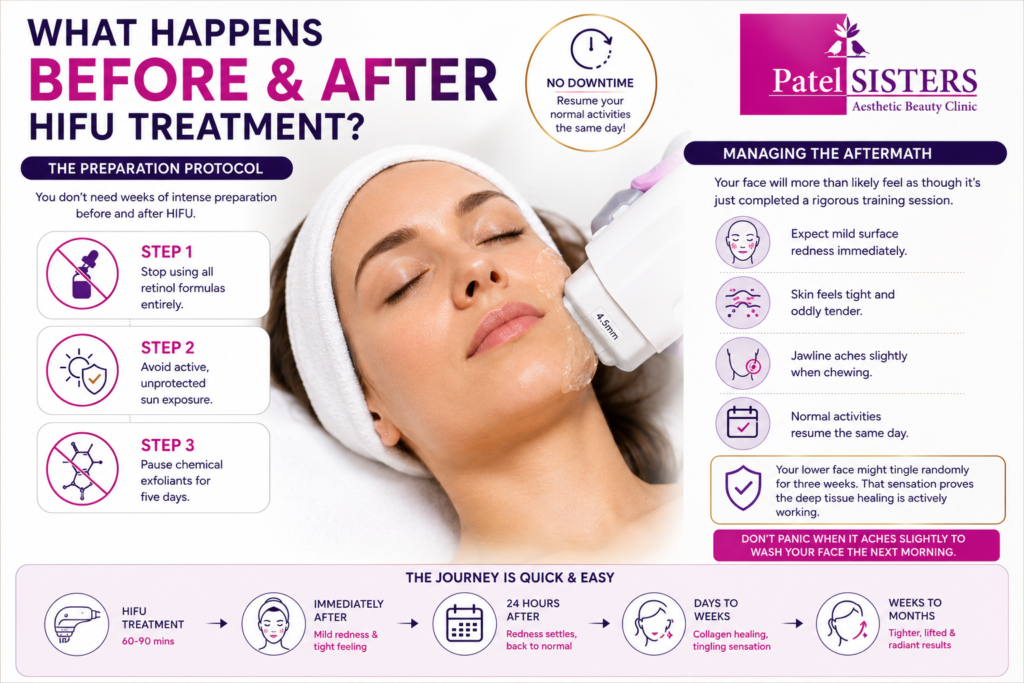
Step 1: Stop using all retinol formulas entirely.
Step 2: Avoid active, unprotected sun exposure.
Step 3: Pause chemical exfoliants for five days.
Managing the Aftermath
It’s what all the reviews on the Internet mention—the procedure has absolutely no downtime. Technically that’s correct, but they choose to neglect one slightly uncomfortable physical aspect of this treatment. Your face will more than likely feel as though it’s just completed a rigorous training session.
- Expect mild surface redness immediately.
- Skin feels tight and oddly tender.
- Jawline aches slightly when chewing.
- Normal activities resume the same day.
Your lower face might tingle randomly for three weeks. That sensation proves the deep tissue healing is actively working. Don’t panic when it aches slightly to wash your face the next morning.
HIFU Results Timeline: What to Expect Week by Week
The Waiting Game
In our society, we want things done yesterday. A dermal filler plumps the cheek the moment the needle comes out. A HIFU does not.
You will look a tiny bit lifted when you walk out of the door. Dont fall in love with this. That initial tightness comes from temporary inflammation in the tissue. Real results take the longest time. Your body needs time on the calendar for intricate new protein to spin.
The Biological Timeline
- Week two brings subtle surface changes.
- Month one reveals initial structural lifting.
- Month three hits peak collagen production.
- Month six displays the final settled outcome.
- Month twelve requires a maintenance check.
Stop staring closely at the bathroom mirror every single morning. Take a harsh photograph before you start the process. Take another at week twelve in the exact same lighting. The stark contrast usually shocks our patients.
How Many HIFU Sessions Do You Need?
Assessing Your True Baseline
Many people have one session and top up every 12–18 months. If you have more laxity, your practitioner may suggest a second session after 3–6 months.
Skin heals so quickly at a younger age. If you are thirty eight and your goal is prevention, then one session a year will carry you most of the way there; you skin will still be robust enough to process the thermal stress and regenerate itself with minimal intervention.
Older skin will need a bit more motivation. Collagen breakdown has been unchecked since the late forties so the collagen matrix that provides a foundational support for your skin is compromised. You typically would have another focused treatment around 6 months later to give you a boost.
Long-Term Reality
Gravity never actually stops pulling downward.
- Results hold steady for eighteen months.
- Annual top-ups preserve the structural lift.
- Smoking destroys your new collagen instantly.
- Sun protection extends results by years.
You can’t treat your skin poorly and expect the machine to save you forever.
How to Choose the Best HIFU Clinic in the UK
Ignore the glossy Instagram photos completely. Focus on clinical protocols instead. Good practitioners welcome intense questioning. They expect it.
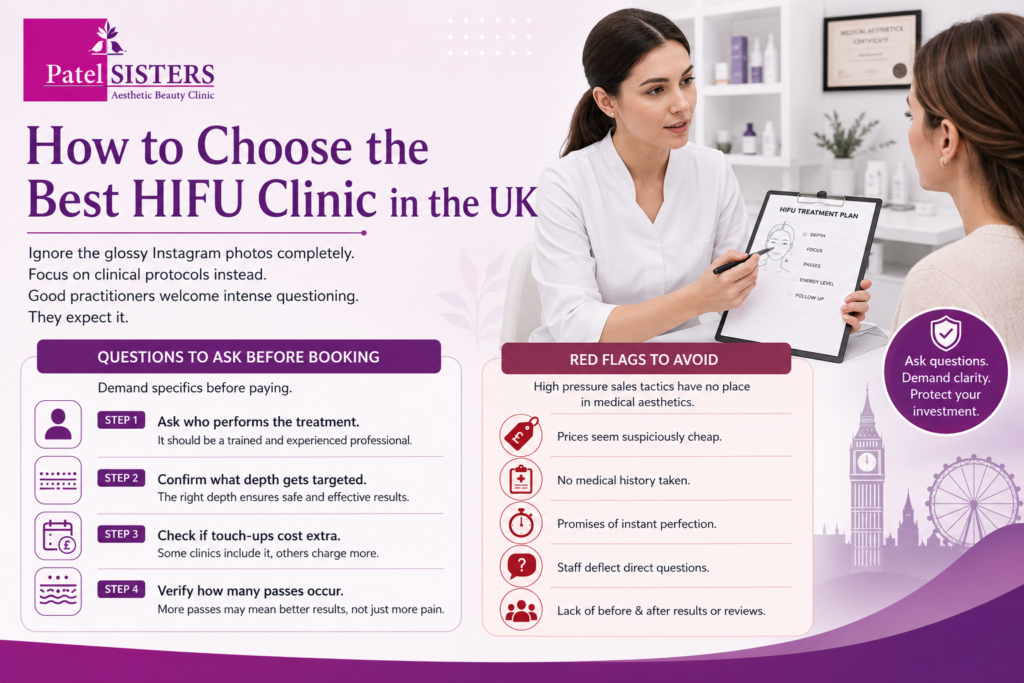
Questions to Ask Before Booking
Demand specifics before paying.
Step 1: Ask who performs the treatment.
Step 2: Confirm what depth gets targeted.
Step 3: Check if touch-ups cost extra.
Step 4: Verify how many passes occur.
Red Flags to Avoid
High pressure sales tactics have no place in medical aesthetics.
- Prices seem suspiciously cheap.
- No medical history taken.
- Promises of instant perfection.
- Staff deflect direct questions.
HIFU at Patel Sisters Clinic: Our Approach and Pricing
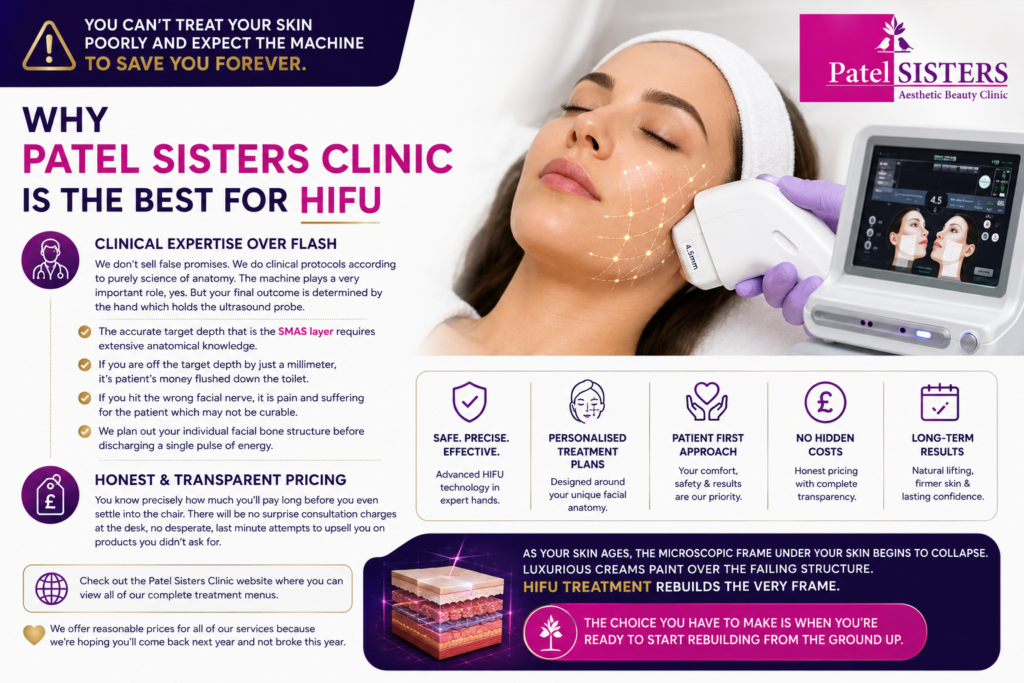
Clinical Expertise Over Flash
We don’t sell false promises. We do clinical protocols according to purely science of anatomy. The machine plays a very important role, yes. But your final outcome is determined by the hand which holds the ultrasound probe.
The accurate target depth that is the SMAS layer requires extensive anatomical knowledge. If you are off the target depth by just a millimeter, incorrect technique can cause side effects such as temporary numbness or nerve irritation. That is why we assess your facial structure and skin laxity before every treatment. We plan out your individual facial bone structure before discharging a single pulse of energy.
Honest and Transparent Pricing
At Patel Sisters Clinic, you are given a clear price after your consultation, before treatment starts. Our HIFU prices are:
| Area | Patel Sisters Price | Time |
|---|---|---|
| Double Chin | £99 | 45 minutes |
| Neck | £99 | 45 minutes |
| Full Face | £149 | 45 minutes |
| Decolletage Area | £169 | 45 minutes |
| Full Face, Neck & Double Chin | £200 | 45 minutes |

HIFU FAQs
What is HIFU?
High-Intensity Focused Ultrasound is a totally non-invasive skin-tightening treatment. This technology targets the deeper layers of the skin with specific high-level heat, to produce new collagen, all without puncturing the surface of the skin.
How does HIFU work?
This medical device uses powerful ultrasound waves below your top layer of skin to heat tissue. This intense thermal energy has a physical contracting effect on flabby tissue and induces your own healing response to create a new matrix of strong collagen.
How much does HIFU cost in the UK?
HIFU in the UK typically costs between £150 and £1,800, depending on the area treated. A brow lift or jawline treatment is at the lower end; a full face and neck treatment in central London is at the top. At Patel Sisters Clinic, prices start from £99.
What should I do before and after HIFU treatment?
Refrain from strong sunshine and strong cosmetic ingredients. Keep yourself hydrated after leaving the clinic. Avoid hot sauna for a couple days. You may wear light makeup right after leaving the clinic.
How long does HIFU take?
For a full face and neck treatment it takes 60-90 minutes whereas for targeted areas, like the brow line or chin/jaw, it will only take around 30 minutes.
Does HIFU hurt?
Most people feel heat and short, sharp pulses of pressure, especially near bony areas like the jawline. The sensation is usually tolerable, and your practitioner can adjust the energy level.
Is HIFU better than a facelift?
They aren’t the same. HIFU offers mild-to-moderate tightening with no surgery and no downtime. A surgical facelift gives a more dramatic and longer-lasting result but involves surgery, recovery time and a higher cost.
How long do HIFU results last?
Results typically last 12–18 months. Age, lifestyle, sun exposure and smoking all affect how long.