
High-Intensity Focused Ultrasound (HIFU) is a nonsurgical skin lifting therapy, it applies Ultrasound waves to heat the deep tissues and cause production of collagen to lift and tone the face and neck. With no downtime, results can be seen over a period of three months, thus it has proved to be a much more cost-effective and non-invasive option to invasive and pain-causing surgical facelifts.
High Intensity Focused Ultrasound provides a non-surgical lift for sagging skin. The treatment works without penetrating the skin’s surface by applying sound waves deep into structural tissue. This thermal trauma stimulates an immediate surge in collagen production, the results of which accumulate gradually over three months. The benefits of HIFU come without any scalpel. The recovery requires absolutely no downtime, and the procedure is priced dramatically lower than traditional lifting options.
It’s easy to panic as the argument with gravity loses to its inevitable win. A dark window is sufficient to catch a reflection where your jawline has appeared significantly less defined than you thought it was. The mind’s first impulse will naturally jump to surgical options, before the sticker shock is assessed. Then there’s the recovery time. A traditional facelift leaves you concealed for weeks on end, with weeks spent hiding in recovery. That sort of disappearing act is a luxury most of us do not have.
HIFU treatment throws that calculus completely out of the window. Simply relax in a chair for about an hour while the HIFU machine zaps sound waves deep into the skin’s dermis, without leaving any marks whatsoever on your face. You walk out only a little red and maybe with a tight feeling on the face. That’s pretty much the extent of the trauma of the procedure. The rest of the lifting work is done by your internal organs over the ensuing ninety days.
What Is HIFU Treatment and How Does It Work?
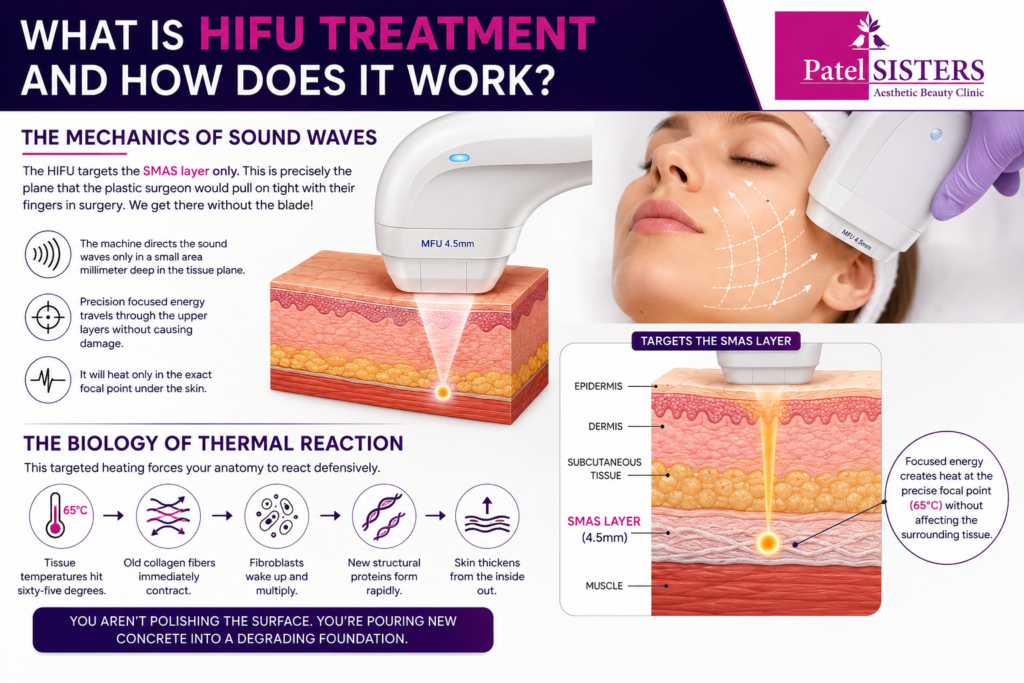
The Mechanics of Sound Waves
The HIFU targets the SMAS layer only. This is precisely the plane that the plastic surgeon would pull on tight with their fingers in surgery. We get there without the blade! Lasers can not do this, light based treatments diffuse on the skin surface. Waves can be focused:
The machine directs the sound waves only in a small area millimeter deep in the tissue plane. If you try to calibrate a compass inside of a car moving. You require a precise location. The energy travels through the upper layers of your dermis and nothing is produced to cause damage, then it will heat only in the exact focal point under the skin.
The Biology of Thermal Reaction
This targeted heating forces your anatomy to react defensively.
- Tissue temperatures hit sixty-five degrees.
- Old collagen fibers immediately contract.
- Fibroblasts wake up and multiply.
- New structural proteins form rapidly.
- Skin thickens from the inside out.
You aren’t polishing the surface. You’re pouring new concrete into a degrading foundation.
What Are the Main Benefits of HIFU for Face and Neck?
Avoiding the Clinical Look
Almost all non-surgical options create cosmetic side effects. Fillers can make you look plump. BadBotox paralyzes your normal facial expressions.
HIFU moves the underlying tissue upwards by sheer force without adding volume to the face. It is your face that you will always have. It is merely higher up on the bone. This is crucial. The windtunnel effect of a poor facelifts haunts Cosmetic Clinics. This effect is avoided completely.
Targeted Treatment Zones
The technology works across multiple distinct anatomical zones.
- Lifting a heavy, dropping brow.
- Tightening loose skin around jowls.
- Smoothing deep horizontal neck creases.
- Sharpening the natural jawline profile.
- Fading stubborn upper chest wrinkles.
- Firming the delicate under-eye area.
You get the same tightening effect but without the needles. Because your body made the new collagen, it’s 100% your own. It takes time. This is also the genius of the cover up. No one ever questions how you did it, they assume you finally started sleeping eight hours a day.
Is HIFU Safe? Side Effects and Who Should Avoid It
Patients ask about safety before price. It carries an excellent track record clinically. Things can get uncomfortable. Heat hits the muscle layer directly. Tiny, rapid static shocks. Pulsing right under your skin. The discomfort proves the energy is reaching the target depth.
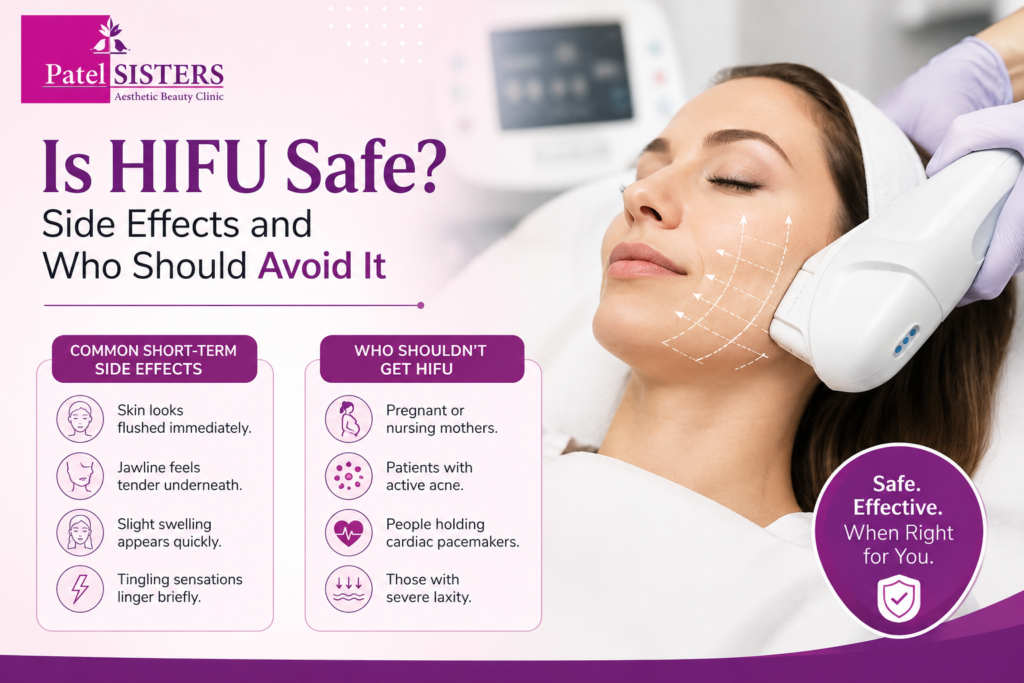
Common Short-Term Side Effects
You’ll likely experience a few temporary physical reactions.
- Skin looks flushed immediately.
- Jawline feels tender underneath.
- Slight swelling appears quickly.
- Tingling sensations linger briefly.
Who Shouldn’t Get HIFU
Practitioners must turn certain profiles away to prevent medical complications.
- Pregnant or nursing mothers.
- Patients with active acne.
- People holding cardiac pacemakers.
- Those with severe laxity.
HIFU vs Botox, Fillers, and Facelift
Most clinics push injectables to guarantee repeat quarterly visits. Ultrasound requires patience. Tissue needs twelve weeks to rebuild. You have to sit with the discomfort of not knowing if it worked until month three. That waiting period tests your nerves.
| Treatment | Downtime | Results Visible | Cost (UK avg) | Longevity |
|---|---|---|---|---|
| HIFU | None | 8–12 weeks | £250–£1,800 | 12–18 months |
| Botox | None | 3–7 days | £150–£350 | 3–4 months |
| Dermal Fillers | 1–2 days mild swelling | Immediate | £200–£500 | 9–18 months |
| Surgical Facelift | 2–4 weeks | Immediate (post-swelling) | £4,000–£10,000+ | 7–10 years |
HIFU vs Botox: Lifting vs Relaxing Muscles
Toxin stops a muscle from moving entirely. Ultrasound tightens the structural layer holding that muscle up. The Botox cost sits around £300.
- Botox smooths upper face.
- Ultrasound lifts lower jowls.
- Results show different speeds.
- Toxins fade much faster.
HIFU vs Surgical Facelift: Cost, Downtime, Results
Surgery cuts and pulls the skin mechanically. Non-surgical options heat the tissue to force natural contraction. Think of it like shrinking a wool sweater in a hot wash. While many search for the price of cheek filler in the UK, ultrasound targets sagging differently.
| Treatment Type | Average London Price | Typical Recovery Time |
| Surgical Facelift | £8,000 to £15,000 | Four to six weeks |
| Premium Ultrasound | £800 to £1,500 | None to mild redness |
| Botox (3 Areas) | £300 to £450 | Zero downtime |
HIFU vs Ultherapy: What’s the Difference?
Ultherapy operates as a branded machine using identical principles. The clinical evidence base shows comparable results between the two technologies. Doctors can see the exact tissue depth they’re targeting on a screen. Unbranded machines fire blind. This remains the only FDA-approved and CE-marked treatment of its kind for lifting the neck and chin.
How Much Does HIFU Cost in the UK?
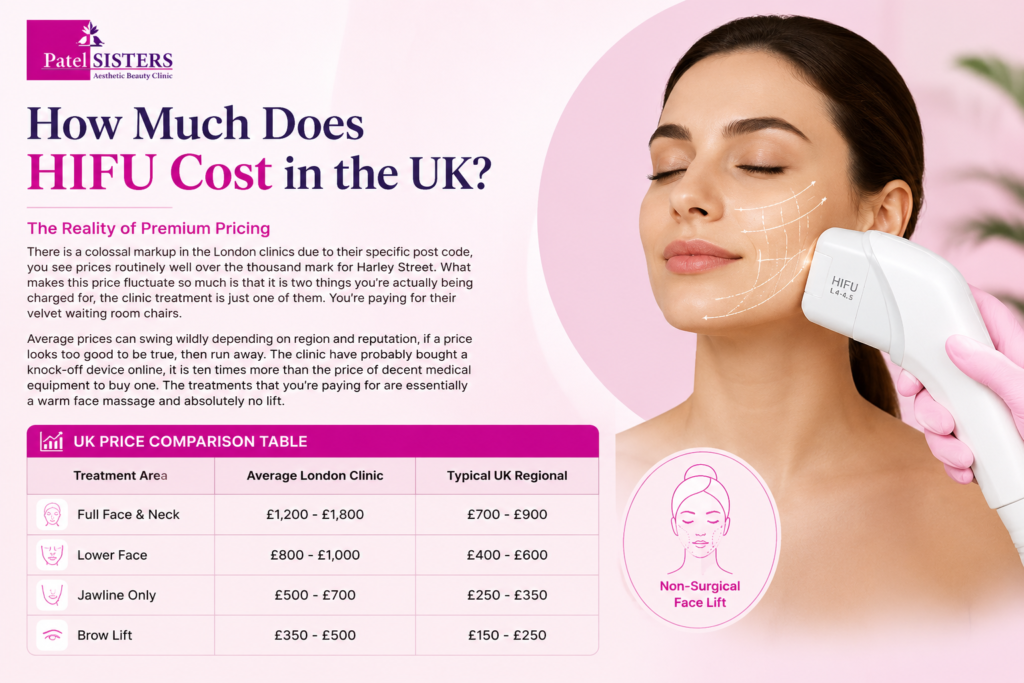
The Reality of Premium Pricing
There is a colossal markup in the London clinics due to their specific post code, you see prices routinely well over the thousand mark for Harley Street. What makes this price fluctuate so much is that it is two things you’re actually being charged for, the clinic treatment is just one of them. You’re paying for their velvet waiting room chairs.
Average prices can swing wildly depending on region and reputation, if a price looks too good to be true, then run away. The clinic have probably bought a knock-off device online, it is ten times more than the price of decent medical equipment to buy one. The treatments that you’re paying for are essentially a warm face massage and absolutely no lift.
UK Price Comparison Table
Pricing varies based on the total treatment area required.
| Treatment Area | Average London Clinic | Typical UK Regional |
| Full Face & Neck | £1,200 – £1,800 | £700 – £900 |
| Lower Face | £800 – £1,000 | £400 – £600 |
| Jawline Only | £500 – £700 | £250 – £350 |
| Brow Lift | £350 – £500 | £150 – £250 |
What Affects HIFU Pricing
A Kensington medical spa charges triple what an Edgware high street shop asks. You’re paying for three separate variables. That machine matters heavily. The person holding the handle matters more. Pricing rarely reflects the actual treatment.
Device Type and Consumables
Counterfeit devices are flooding the market right now.
- Cartridges have strict limits.
- Premium brands cost more.
- Cheap devices risk burns.
- Maintenance adds hidden fees.
The consultation fee should automatically roll into your final bill. Never pay hidden surcharges just for basic numbing cream.
Practitioner Experience and Clinic Location
Rent dictates a massive chunk of your bill. Harley Street doctors charge for their zip codes. Meanwhile, a clinic in Edgware might offer the identical protocol for half the price. You’re funding the clinic’s overhead.
What Happens Before and After HIFU Treatment?
The Preparation Protocol
You don’t need weeks of intense preparation before and after HIFU. Just clear your afternoon schedule.
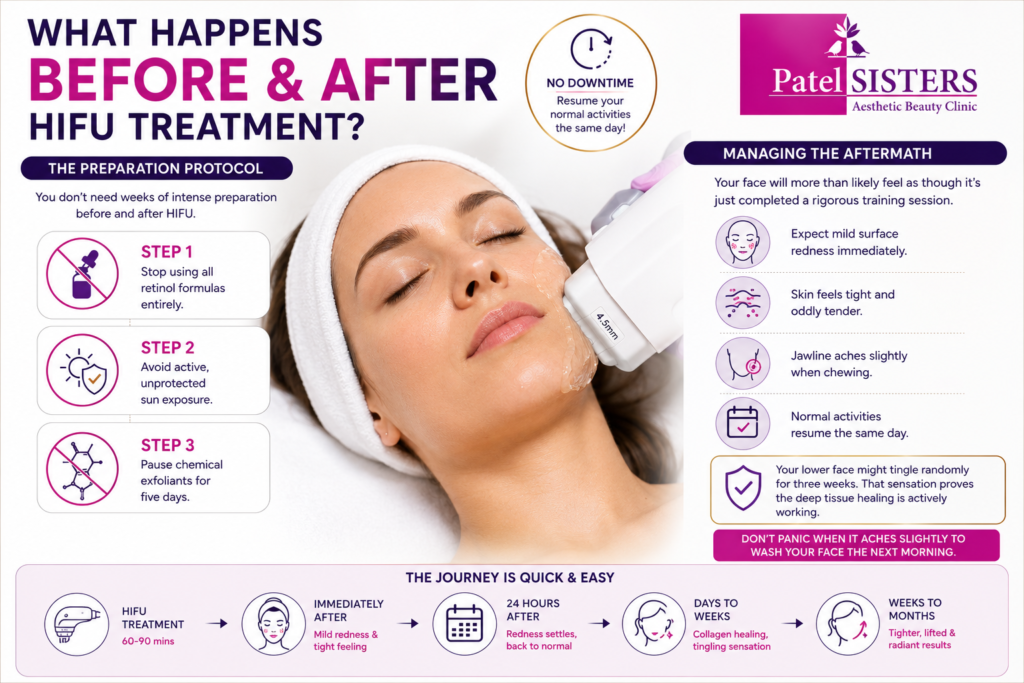
Step 1: Stop using all retinol formulas entirely.
Step 2: Avoid active, unprotected sun exposure.
Step 3: Pause chemical exfoliants for five days.
Managing the Aftermath
It’s what all the reviews on the Internet mention – the procedure has absolutely no downtime. Technically that’s correct but they choose to neglect one slightly uncomfortable physical aspect of this treatment. Your face will more than likely feel as though it’s just completed a rigorous training session.
- Expect mild surface redness immediately.
- Skin feels tight and oddly tender.
- Jawline aches slightly when chewing.
- Normal activities resume the same day.
Your lower face might tingle randomly for three weeks. That sensation proves the deep tissue healing is actively working. Don’t panic when it aches slightly to wash your face the next morning.
When Will You See HIFU Results?
The Waiting Game
In our society, we want things done yesterday. A dermal filler plumps the cheek the moment the needle comes out. A HIFU does not.
You will look a tiny bit lifted when you walk out of the door. Dont fall in love with this. That initial tightness comes from temporary inflammation in the tissue. Real results take the longest time. Your body needs time on the calendar for intricate new protein to spin.
The Biological Timeline
- Week two brings subtle surface changes.
- Month one reveals initial structural lifting.
- Month three hits peak collagen production.
- Month six displays the final settled outcome.
- Month twelve requires a maintenance check.
Stop staring closely at the bathroom mirror every single morning. Take a harsh photograph before you start the process. Take another at week twelve in the exact same lighting. The stark contrast usually shocks our patients.
Do You Need More Than One HIFU Session?
Assessing Your True Baseline
Almost all clients are happy with one session, achieving their goal.
Skin heals so quickly at a younger age. If you are thirty eight and your goal is prevention, then one session a year will carry you most of the way there; you skin will still be robust enough to process the thermal stress and regenerate itself with minimal intervention.
Older skin will need a bit more motivation. Collagen breakdown has been unchecked since the late forties so the collagen matrix that provides a foundational support for your skin is compromised. You typically would have another focused treatment around 6 months later to give you a boost.
Long-Term Reality
Gravity never actually stops pulling downward.
- Results hold steady for eighteen months.
- Annual top-ups preserve the structural lift.
- Smoking destroys your new collagen instantly.
- Sun protection extends results by years.
You can’t treat your skin poorly and expect the machine to save you forever.
How to Choose the Best HIFU Clinic in the UK
Ignore the glossy Instagram photos completely. Focus on clinical protocols instead. Good practitioners welcome intense questioning. They expect it.
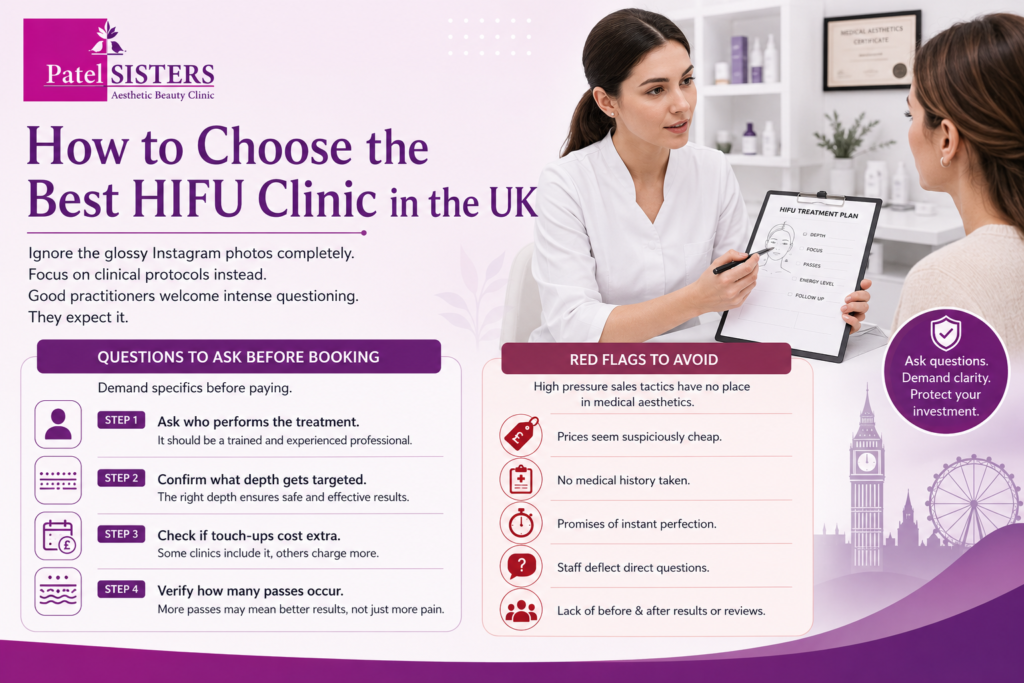
Questions to Ask Before Booking
Demand specifics before paying.
Step 1: Ask who performs the treatment.
Step 2: Confirm what depth gets targeted.
Step 3: Check if touch-ups cost extra.
Step 4: Verify how many passes occur.
Red Flags to Avoid
High pressure sales tactics have no place in medical aesthetics.
- Prices seem suspiciously cheap.
- No medical history taken.
- Promises of instant perfection.
- Staff deflect direct questions.
Why Patel Sisters Clinic is the Best for HIFU
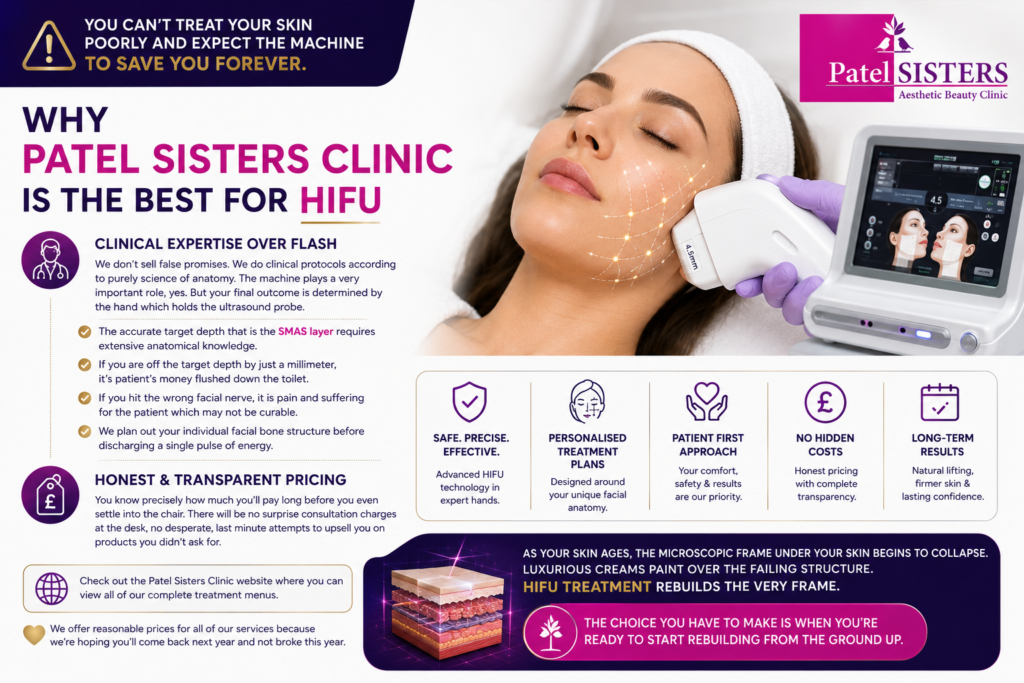
Clinical Expertise Over Flash
We don’t sell false promises. We do clinical protocols according to purely science of anatomy. The machine plays a very important role, yes. But your final outcome is determined by the hand which holds the ultrasound probe.
The accurate target depth that is the SMAS layer requires extensive anatomical knowledge. If you are off the target depth by just a millimeter, it’s patient’s money flushed down the toilet. If you hit the wrong facial nerve, it is pain and suffering for the patient which may not be curable. We plan out your individual facial bone structure before discharging a single pulse of energy.
Honest and Transparent Pricing
You know precisely how much you’ll pay long before you even settle into the chair. There will be no surprise consultation charges at the desk, no desperate, last minute attempts to upsell you on products you didn’t ask for. Check out the Patel Sisters Clinic website where you can view all of our complete treatment menus. We offer reasonable prices for all of our services because we’re hoping you’ll come back next year and not broke this year.
As your skin ages, the microscopic frame under your skin begins to collapse. Luxurious creams paint over the failing structure of your skin. HIFU Treatment rebuilds the very frame. The choice you have to make is when you’re ready to start rebuilding from the ground up.

FAQs :
What is HIFU?
High-Intensity Focused Ultrasound is a totally non-invasive skin-tightening treatment. This technology targets the deeper layers of the skin with specific high-level heat, to produce new collagen, all without puncturing the surface of the skin.
How does HIFU work?
This medical device uses powerful ultrasound waves below your top layer of skin to heat tissue. This intense thermal energy has a physical contracting effect on flabby tissue and induces your own healing response to create a new matrix of strong collagen.
How much does HIFU cost in the UK?
Prices run from £400 to well over £1,500. Central London clinics charge the highest premiums purely for their location. Quality regional clinics offer the exact same medical technology for significantly less money.
What should I do before and after HIFU treatment?
Refrain from strong sunshine and strong cosmetic ingredients. Keep yourself hydrated after leaving the clinic. Avoid hot sauna for a couple days. You may wear light makeup right after leaving the clinic.
How long does HIFU take?
For a full face and neck treatment it takes 60-90 minutes whereas for targeted areas, like the brow line or chin/jaw, it will only take around 30 minutes.