
Cheek filler can also be an attractive option for anyone whose cheeks have begun to flatten over time and anyone wanting more sculpted facial structure without resorting to a procedure. In the following guide, we walk through what happens in a typical procedure, what you can expect throughout the first few days of recovery, how cheek fillers stack up against their jaw and chin counterparts, and the real expectations after getting cheek filler in terms of results.
Introduction
A number of people mention their cheeks aren’t quite as full and round as they used to be, and as we age, natural decreases in collagen, elastin, and the face fat on our cheeks result in loss of structure and volume, which causes face volume loss. Genetics and bodyweight changes can cause loss in face shape.
Cheek fillers are a type of nonsurgical injection that restores lost facial volume, enhances natural curves, and improves your facial proportions. The ultimate goal is not to completely alter your appearance but rather to achieve a refreshed, natural look and enhance your existing facial features.
If you’re exploring the option of cheek filler, you may have some questions about cheek filler. This article covers the basics about how cheek filler treatment works, what to expect in a cheek filler appointment and after your treatment, and also the longevity of your cheek filler results. We will also compare cheek filler with some facial treatment, which will help you decide whether cheek filler treatment would be beneficial for your cheeks.
What Cheek Fillers Really Do
Cheek filler is not about making your cheeks look bigger. It can make your face look more balanced, make your cheeks look more defined, and give you a look without changing the way you look naturally. The doctor will make a plan that’s just for your face so you will not look like you have had too much work done; the results will look very natural.
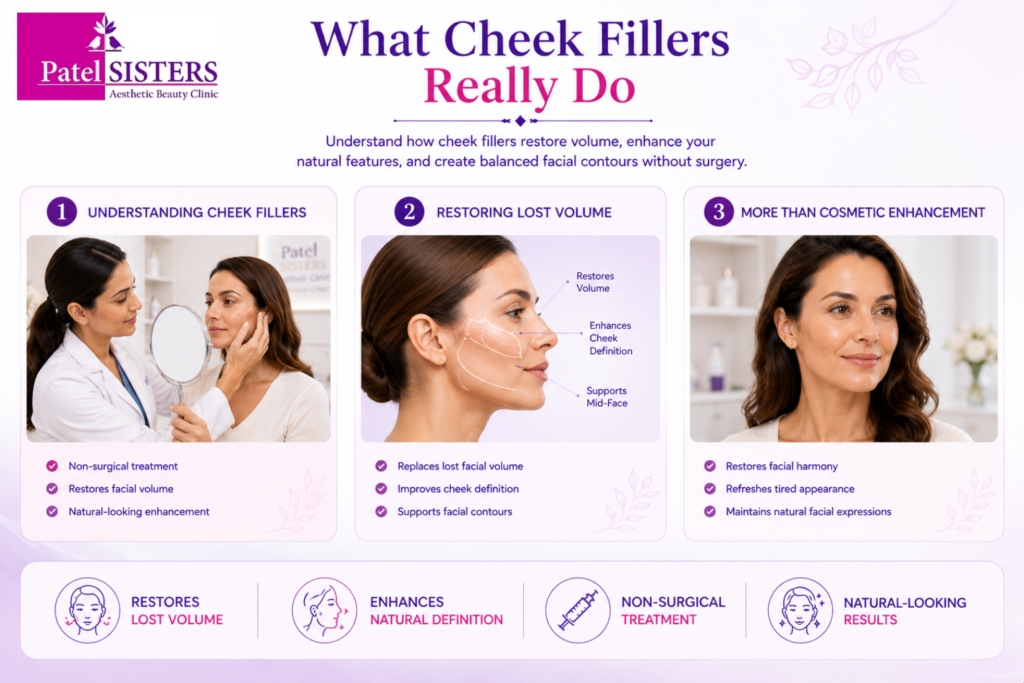
Understanding Cheek Fillers
Cheek filler is a treatment that does not require surgery. It is a filler to give fuller-looking cheeks. Our body lacks many substances, such as collagen and some facial fat, when aging. This can make our cheeks look flat. The cheek filler helps to add some volume to the cheeks. This makes the face look better and more refreshed without having to go through surgery. Cheek fillers are really good at giving the face a lifted look.
How They Restore Lost Volume
The filler is put in areas of the cheeks to help get back the support that has been lost. This helps the cheeks look fuller. It also makes the face look better by improving the contours. The filler helps to make the face look smoother by softening the lines between areas of the face. Every treatment plan for the filler is made for the person because every face is different. Every face has its shape, its own structure, and its own amount of natural volume. The filler treatment plan is personalized for each person’s face.
Why They’re More Than Just a Cosmetic Treatment
Cheek filler is popular, as you may want to achieve a refreshed and rested appearance as opposed to a dramatically different face. Replacing lost cheek volume will make your overall face shape more balanced and less sunken in, giving you that well-rested look that can appear with age. When performed expertly, this treatment aims to enhance the original proportions of your face in a subtle and natural way.
Which dermal filler is most suitable for cheek treatment?
There is not one type of filler that everyone must use. Dermal fillers are different. What is best for you depends on the shape of your face and the amount of volume you have lost. It also depends on the look you want to get from using fillers. When you see someone who is experienced with fillers, they will tell you which dermal filler is best for you after they take a close look at your face and the facial features you have.
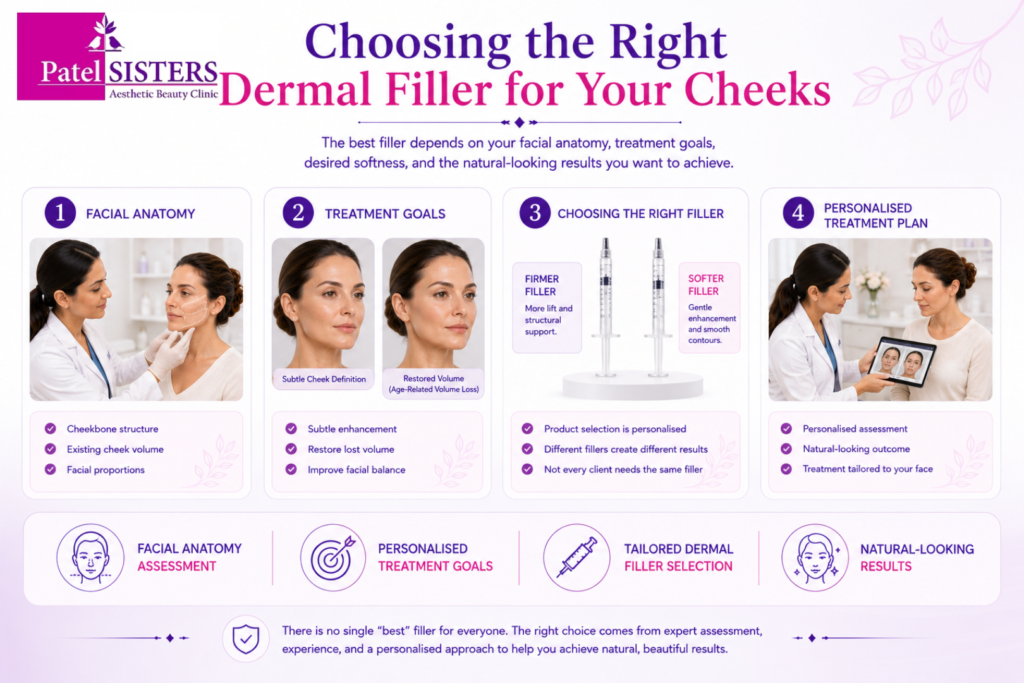
Different Types of Dermal Fillers
Cheek fillers are usually made from acid. Our body already has this naturally; in the cheeks, it actually helps give volume when you have your face filled, which can actually look very natural, and if it is not desired, it is also removable or changeable. Cheek fillers made from acid are a good choice for many people. They are good at restoring the volume in our cheeks. They give us natural-looking results. We can also adjust cheek fillers made from acid or dissolve them if we need to.
They are available in different hyaluronic acid fillers. Some types of HA fillers are thick, giving lots of lift and support for putting back in lost volume of the cheeks. Other hyaluronic fillers are softer, which makes the skin look smoother. These hyaluronic acid fillers are ideal for modifications.
Dermal fillers come in many different varieties, such as calcium hydroxylapatite and poly-L-lactic acid, and these could be the right choice in some instances. But, ultimately, your choice of the perfect filler will rely upon the structure of your face and your skin condition, in addition to the result you want to obtain along with your chosen medical professional’s skilled judgment.
They will select the product that will most suitably complement your face and the most natural result rather than all clients using the same product filler.
How Your Practitioner Chooses the Right Product
But choosing the filler will mean so many other things will be considered apart from the brands. Your treating practitioner will analyze your facial bone shape, how much volume your cheeks have, and what the tone and quality of the skin are, as well as how proportionate your face is to your body frame. Your expectations and desires would also be put into consideration, like are you seeking a better definition in facial shape, or are you looking to fill your lost volume in your face, or are you looking to enhance facial symmetry or a general harmony in your features? The aim is to beautify what nature gave you in the most natural way.
Why Facial Structure Matters
All faces are different, so a single treatment doesn’t fit all. Your practitioner will recommend the filler that provides enough support for your face or a softer option if you prefer. They will also want to achieve your desired level of smoothness and duration when designing your treatment plan to create balanced, natural-looking cheeks.
Your Cheek Filler Journey: Before, During and After
If this is your first time thinking about cheek filler, then it’s understandable to be a bit worried about what you can expect during the appointment. To put your mind at ease, it’s a good idea to be aware of what each phase of the cheek augmentation process looks like, right from the consultation to the aftercare advice that you will be given to take away.
Appointment preparation
First of all, the practitioner will carry out an in-depth consultation with you; they will ask questions regarding your past medical history, what treatments have been carried out previously, and what you wish to achieve from the treatments. Following that, the practitioner will give you an extensive evaluation of your face—they will be analyzing your cheekbone structure, the balance of your facial structure, your skin quality, and how much loss of volume you have suffered. This is to ensure that we formulate a treatment plan perfectly suited to the shape of your face.
Before we start any treatment, the skin on the treatment site will be cleaned, and numbing cream can be applied so you will be able to feel more comfortable. There’s still time to ask your questions before we get started with the procedure.
What Will Happen During Treatment?
After they have prepared your skin, the practitioner injects the filler into the cheeks. The practitioner either uses a needle or a cannula—depending on your desired treatment—and the filler is injected carefully, bit by bit, to increase the volume and definition of the cheek areas. The intention here is for your features to remain balanced and look as natural as possible. This means that the practitioner needs to deliver filler to the correct areas to ensure you end up with a more prominent cheek.
Throughout your appointment, your practitioner will continue to check your result from various angles in order to keep both of your cheeks in symmetry. Appointments usually only take between 30 and 60 minutes but may take longer or shorter, depending on the procedure you choose.
Immediate Aftercare
After your procedure, your doctor will check the treatment area to discuss post-procedure instructions to ensure you properly care for your cheeks for a couple days. Mild swelling, redness, or tenderness or bruising is common and will clear as your skin heals.
We will offer you the aftercare advice for your condition. These might be the kind of instructions such as staying away from exercising for the time being, preventing overheating, avoiding drinking, and also ensuring there’s no weight placed on the treatment for a period of time.
Cheek Filler Recovery: When Will the Swelling Settle?
It is expected that the cheek filler will swell up, as there will be a natural amount of swelling post-procedure. As everyone’s healing is different, it is natural that their recovery may vary from your neighbors’ or the friends’ whose filler journey you read about. The amount of swelling is often determined by your own body and type of procedure. You will see it begin to go down over a week or two after the filler has settled.
First 24 hours
Generally, the first few days you will experience mild swelling and pain in the area of the injection, some redness, and possible bruising, which typically will resolve within a couple of days.
Why Swelling Can Peak on Days 2–3
Many people get concerned that swelling will actually appear more prominent on day 3 of the procedure. This is just the normal inflammatory response in action as the body goes about the business of healing. You might feel that your cheeks are a little plump. This is usually something that goes away on its own and gets better slowly. The swelling is part of the body’s natural healing response, and it takes some time for the body’s natural healing process to finish. The body’s natural healing process is still. That is why the swelling is more noticeable on the second or third day, after treatment.
Week One Recovery
At this point the swelling and bruising should be getting better, and the cheeks should feel more comfortable. The swelling of the procedure should begin to soften and look more natural. Some of the swelling may still persist, but the cheeks and the results should continue to improve. Swelling is a common thing for the results of the procedure to deal with.
Week Two: Seeing Your Final Results
Two weeks after you get the treatment, the filler is usually settled in, and most of the swelling is gone. At this point you can really see how you look with the filler. You will like the way your cheeks look with more volume and definition. If you need to, your practitioner will look at your results again when you go back for a follow-up appointment with the practitioner to check on the filler results.
Tips to Reduce Swelling
You can support your recovery by following your practitioner’s aftercare advice. Helpful tips include:
- Apply a cold compress if recommended.
- Sleep with your head slightly elevated on the first night.
- Stay away from heavy exercise for the time that your practitioner instructs.
- Don’t use the saunas or the really hot baths for the first two or three days—keep things cool.
- Don’t forget to drink some water and keep up with your aftercare routine.
- Don’t press or rub the area that was treated unless your technician instructs you to do so.
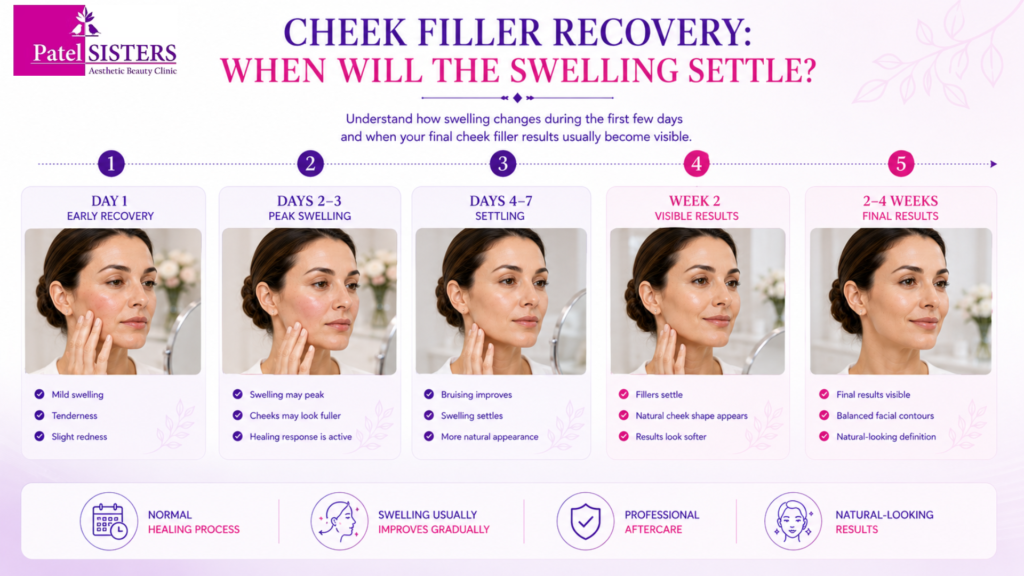
Recovery Timeline
Day 1
Following treatment, swelling and slight tenderness and redness in the cheeks are perfectly normal. Others experience light bruising on the areas treated.
Days 2–3
A bit more swelling can occur during this stage, and your cheeks might appear to be even puffier than you had anticipated. But this is the normal process of healing and will generally decrease over the next several weeks.
Days 4–7
Your swelling and bruising have probably begun to subside, and your cheeks are feeling a little more comfortable. They’re beginning to start looking a lot softer and a bit more natural.
Week 2
Two weeks later most of the swelling will be gone and the filler will have started to settle down, giving you the natural look with the fresh shape of your cheeks
2–4 Weeks
Mostly you can see what the final result will look like. If your provider suggests you schedule another appointment, this can also be a great chance to review your outcome and see if we need to make any slight tweaks to it.
Cheek Fillers vs Other Facial Enhancement Treatments
Every facial filler treatment serves a goal. Cheek fillers help add volume and make the middle part of your face look better. Jawline and chin fillers work on areas to make your face look more balanced. Sometimes getting more than one treatment can make you look more natural and put together. Your doctor will suggest the way to go based on your face and what you want to achieve with the treatment. They will look at your features and goals to recommend the right approach. This way you get the results that are just right for you and your face.
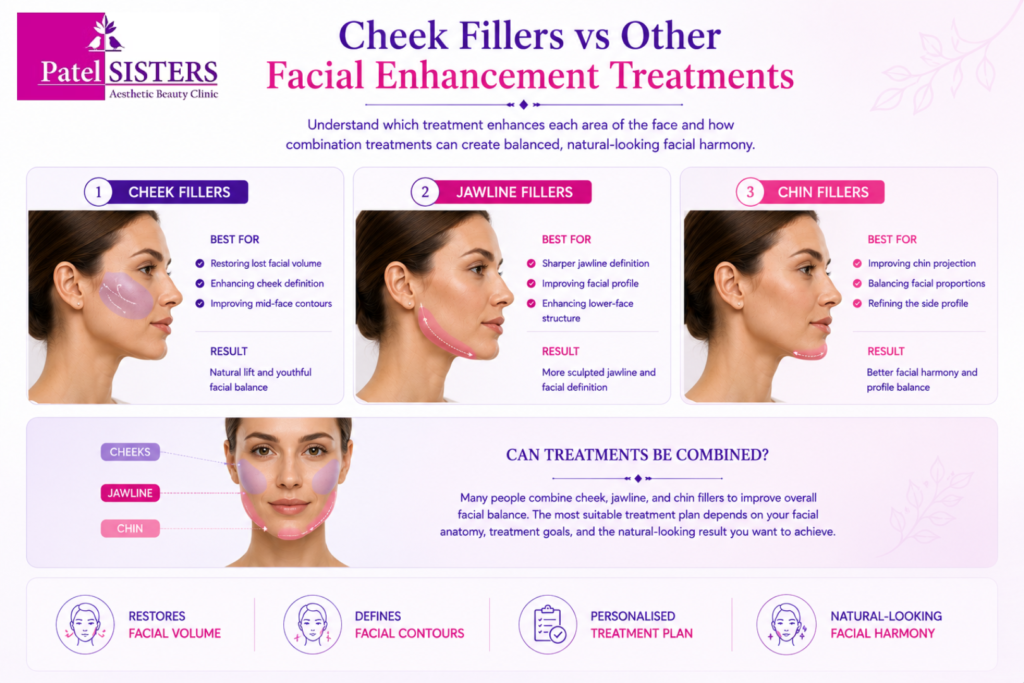
Cheek Fillers vs Jawline Fillers
Dermal fillers are used in both treatments. They work on different parts of the face.
Cheek fillers are great for restoring the volume that is lost, making your cheekbones look better and improving the shape of your face.
Jawline fillers do a job; they help make your jawline look more defined, give you a sharper profile, and make the lower part of your face look better.
You need to figure out which dermal filler treatment is right for you. It depends on what part of your face you want to make look better: the cheek fillers or the jawline fillers.
Cheek Fillers vs Chin Fillers
Cheek fillers and chin fillers are used together to make the face look better. They help with different problems. Cheek fillers are effective at adding volume and lift to the center of your face, while chin fillers are perfect for a defined chin with better balance. For a small chin or a chin that is set back, the use of chin fillers can bring the rest of the face into proportion with cheek fillers. Cheek fillers and chin fillers are a combination because they work on different areas of the face.
Can Treatments Be Combined?
People can definitely do that. A lot of individuals like to get cheek fillers along with jawline or chin fillers. This helps them get a balance in their face. They do not just focus on one part of their face. Some people only need to get one treatment. When you go for your consultation to see the person performing the procedure, they’ll check your face shape. They will then discuss your goals with you. Then they will tell you what they think is the plan for you. They want to make sure your face looks natural and nice so they will not put much filler in any one area. They want to make sure you get the results you want, from the cheek fillers and other fillers.
Conclusion
Cheek fillers might be ideal for you if you wish to add fullness back into the skin after you’ve lost volume over the years, define your cheeks, or enhance overall facial symmetry without the need for surgery. As everybody is unique, every individual will achieve optimal results when undergoing a tailored plan designed to fit your individual facial structure and overall desires. At the Patel Sisters Clinic, we will consult you thoroughly before determining which treatment plan will help define your features with natural results.

FAQs
1. What does cheek filler do?
Cheek fillers can give volume back to your face if you have experienced loss, enhance definition to the cheeks, and provide harmony to the overall face. In addition, cheek filler treatment may help you appear younger and more rested.
2. How long do fillers last?
Cheek filler generally lasts 9-18 months and is dependent on which cheek filler you choose to go with, how you metabolize it, your lifestyle, and the area the cheek filler will be injected into. Your practitioner will tell you the likely result you should expect during the consultation.
3. How long do cheek fillers take to settle?
Swelling will resolve on its own within the first 1 to 2 weeks, for the most part. Cheek fillers typically completely settle in 2 to 4 weeks and will show your final results.
4. Does cheek filler hurt?
People usually find that cheek filler is not too bad to deal with. Before they do the treatment, they put a cream on your face to numb it. The cheek filler itself also has something in it to help with the pain. When they are giving you the injections, you might feel pressure, or it might pinch a bit.
5. How much cheek filler do I need?
The cheek filler dose is completely dependent on the individual. For example, some patients will have optimal results with just 1 ml; other patients may require 2 ml or even more depending on facial structure, volume loss, personal preferences, and desired outcome.